
Banks That Simplify Borrowing Will Win the Next Generation of Loyalty
By Jessica Kendall, Contributor at The Financial Brand
Simple Subscribe
Subscribe Now!
Consumer debt has become increasingly difficult to manage and it’s not simply because balances are growing. Today, borrowers are juggling more financial relationships than ever before.
New research from Spinwheel suggests that multiple lenders, payment schedules, interest rates, and digital experiences are creating a level of complexity that many consumers find overwhelming. While most borrowers say they understand how much they owe, many struggle to determine the best next step, whether that’s consolidating debt, comparing products, or managing multiple payments.
The findings also highlight shifting consumer expectations, particularly among younger generations that place greater value on convenience, personalized guidance, and digital recommendations than long-standing banking relationships.
Key takeaway: Institutions that simplify the borrowing experience and deliver more relevant financial guidance have an opportunity to deepen customer relationships while improving financial outcomes.
Need to Know:
- Consumers increasingly view debt complexity, not just debt balances, as a source of financial stress.
- 57% of consumers say thinking about debt feels overwhelming, including 74% of Gen Z and 72% of Millennials.
- Many borrowers understand what they owe but lack confidence in how to improve their financial situation. For example, 31% want to consolidate debt but do not know how, rising to 52% among Gen Z.
- Friction throughout the lending journey continues to drive application abandonment and missed opportunities.
- One in five consumers frequently abandon credit applications that require too much information, while half of Gen Z say they abandon applications at least half the time for that reason.
- Better customer experiences increasingly depend on relevant recommendations built on a complete view of customer liabilities.
- Half of consumers typically consider their existing financial provider first when seeking new credit products, but only about one-third of Gen Z and Millennials do the same.
Debt Complexity Is Becoming the Biggest Customer Experience Challenge
Traditionally, lenders have measured consumer debt primarily by balances, delinquency rates, and credit scores. Those metrics remain essential, but Spinwheel’s latest survey suggests another dimension deserves equal attention: complexity.
Today’s borrowers often manage mortgages, credit cards, auto loans, student loans, buy now, pay later balances, and personal loans simultaneously. Each obligation comes with its own lender, payment schedule, servicing portal, and terms. As those relationships accumulate, managing debt becomes more complicated than simply making payments on time.
The complexity of modern debt is influencing everything from financial confidence to borrowing decisions. The survey found that a majority of consumers describe thinking about debt as overwhelming, regardless of the specific products they hold. Among younger generations, the feeling is even more pronounced. At the same time, Gen Z is the first generation to say it feels more financial pressure from the number of payments it manages, not the total amount it owes.
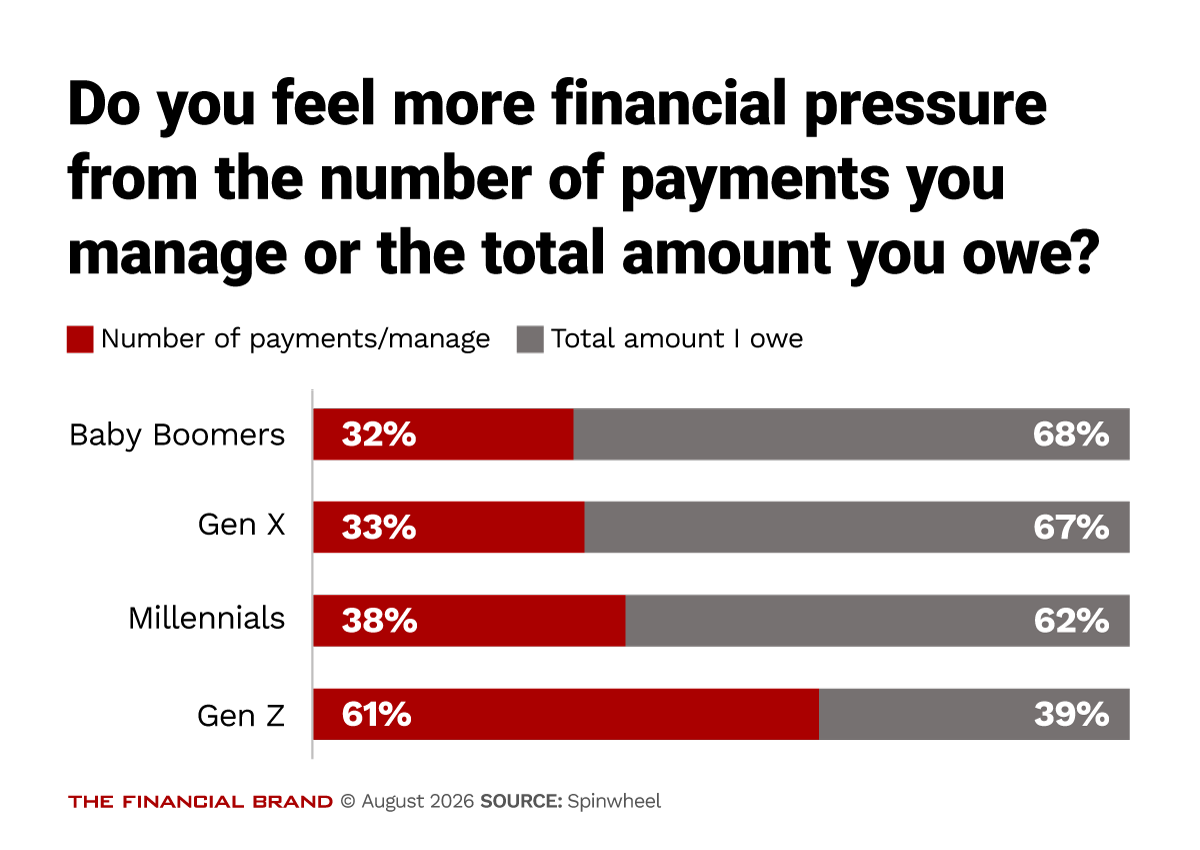
Key takeaway: For financial institutions, this shifts the conversation from simply extending credit to helping customers organize and navigate increasingly fragmented financial lives. The institution that makes borrowing easier to understand may earn as much loyalty as the one offering the lowest rate.
Knowing Isn’t the Same as Managing
The report also reveals a gap between financial awareness and financial confidence.
Nearly 9 out of 10 respondents believe they understand their overall debt picture. Yet almost half cannot identify their interest rates without checking, and nearly one-third say they would like to consolidate debt but do not know how. Understanding a debt balance is different from knowing what to do next.
The pattern becomes even more pronounced among younger consumers. Half of Gen Z respondents say they avoid looking at their finances when possible, while a majority who want to consolidate debt are unsure where to begin.
For retail banks, this represents an opportunity to rethink financial wellness. Traditional financial education alone may not be enough. Customers increasingly need tools that organize accounts, surface actionable recommendations, and simplify decisions across multiple obligations.
Key takeaway: The institutions that successfully reduce cognitive load could strengthen engagement while helping customers make better financial decisions.
Loyalty Alone Won’t Win Younger Borrowers
Historically, winning a customer’s primary banking relationship often meant winning future borrowing decisions as well. A checking account frequently became the starting point for the next credit card, auto loan, or mortgage.
That advantage appears to be weakening.
Half of survey respondents still say they typically begin with financial providers they already use when considering new credit products. Among Gen Z and Millennials, however, those percentages fall dramatically. Younger borrowers increasingly consult AI assistants, marketplace websites, and recommendations from friends and family before choosing a lender.
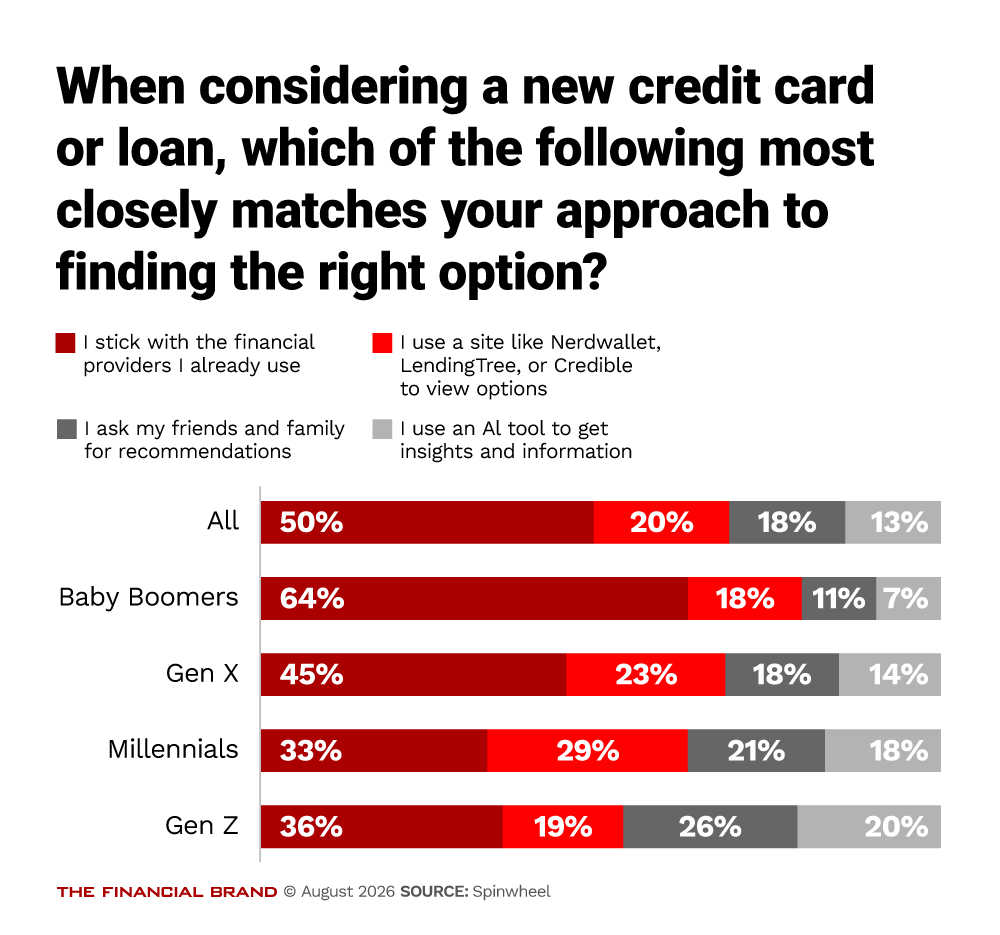
This reflects a broader shift in how consumers discover financial products. Instead of relying primarily on existing relationships, borrowers increasingly evaluate options wherever recommendations appear.
Key takeaway: For marketing leaders, that means competing beyond owned channels. Brand visibility inside comparison marketplaces, recommendation engines, AI-generated responses, and other discovery channels may become just as important as cross-selling existing customers.
Every Friction Point Has a Cost
Finally, the report makes it clear that consumers have little patience for unnecessary effort.
Respondents reported abandoning loan applications when asked to provide excessive information, walking away from online purchases when payment details were inconvenient to retrieve, and becoming frustrated by offers that failed to reflect their actual financial situation.
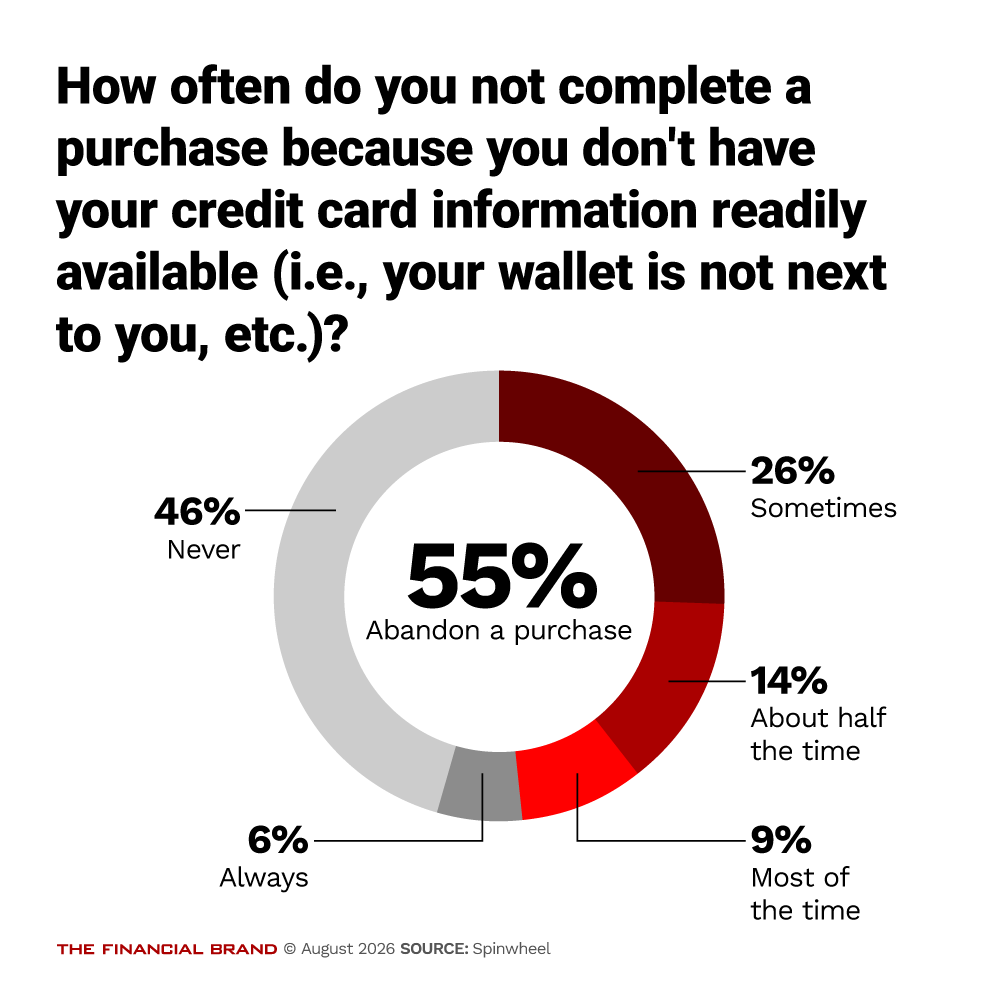
Every unnecessary application field or irrelevant offer signals that an institution doesn’t fully understand the customer. Asking applicants to repeatedly provide information the bank already has creates friction, while promoting refinancing at a higher rate or advertising products customers already own undermines personalization.
As financial institutions invest in customer data platforms, AI, and digital lending experiences, the greatest return may come from making interactions feel simpler rather than adding more features.
Bottom line: Consumers experience debt differently than they did a decade ago. The challenge is increasingly one of coordination rather than calculation. For banks and credit unions, that shifts the competitive equation. Success depends less on helping customers borrow and more on helping them make sense of what they already have.
Institutions that simplify financial complexity through clearer guidance, better data, and more intuitive experiences will be better positioned to earn trust long after the loan closes.


