
Clickable to Credible: How Design Drives Financial Loyalty
By Ambreen Sharif, Creative Director & Marketing Consultant
Simple Subscribe
Subscribe Now!
Executive Summary
- Nearly 94% of a customer’s first impression of a financial brand is based on design, not content.
- In a sector still ranked among the least-trusted industries globally, visual identity is one of the most powerful tools for building digital trust.
- While often considered an afterthought, design is a critical trust signal that helps close the gap between a brand’s value and its perception.
In financial services, trust is everything. It influences where people choose to bank, invest or manage their money. Today, much of that trust is shaped through digital interactions — long before a customer ever speaks to someone in person.
Every element of those digital experiences contributes to how a customer perceives your brand. From your website to your app to your social channels, design plays a central role in shaping trust.
Yet too often, visual identity is treated as an afterthought, disconnected from business goals or marketing strategy. Instead, design is a critical trust signal that helps close the gap between what your brand promises and how it is perceived.
What ‘Trust’ Means in Financial Services
Trust has always been a challenge for the financial industry. With financial services ranking among the least-trusted industries globally according to the 2023 Edelman Trust Barometer, and in a landscape where digital trust leaders are 1.6x more likely to outperform on revenue growth, building trust is business-critical.
These numbers show a huge opportunity for financial institutions and fintechs alike. The difference in 2025 is where trust is built: not in a branch but through digital experiences.
When customers visit a website, download an app or visit your Instagram profile, they make snap judgments about whether they feel safe doing business with your company. Studies show that users form an initial impression of a website in as little as 50 milliseconds — based purely on visual factors like layout, typography, color and imagery.
Research from the Stanford Web Credibility Project found that 94% of a user’s first impression of a site is based on design, not content. For financial brands, that first visual impression directly impacts whether someone opens an account, applies for a loan, or recommends your institution to others.
But trust in financial services is not abstract, it’s personal.
Money remains the number one source of stress for consumers, ahead of relationships, career, or health. 88% feel some level of financial stress, and 65% say finances are their biggest source of stress, according to MarketWatch Guides. With finances tied so closely to a consumer’s livelihood, trust is simultaneously hard-won and fragile.
Scholars and industry frameworks describe digital trust in financial services as a multi-layered experience:
1. Functional: Does the product or service work reliably?
2. Security: Is the platform safe and does it protect personal data?
3. Emotional: Does the brand demonstrate care, reassurance, and empathy?
4. Visual trust: Does the design itself convey competence and credibility?
A polished, cohesive visual identity is a key component that financial brands can use to build trust from the first click.
Of course, great design alone will not compensate for poor products or unethical practices. Design is only one piece of the puzzle. Earning trust requires a thoughtful look at every part of the customer experience, from digital channels to in-branch experiences to the policies that shape them.
Dig deeper:
Common Design Pitfalls That Can Undermine Trust
If thoughtful design builds trust, poor design can have the opposite effect. Many financial brands still struggle with outdated digital experiences that can undermine consumer confidence. These are some of the most common design pitfalls:
1. Generic or templated websites
Many financial institutions use off-the-shelf templates that lack personality or connection to the brand. These sites feel impersonal and unmemorable, which makes it harder to build emotional trust. Worse, templates often signal to consumers that the institution may be small, unsophisticated, or outdated.
2. Outdated typography and inconsistent branding
Design systems with old fonts, clashing colors, or inconsistent imagery send mixed signals to customers. In an industry built on trust and professionalism, visual inconsistency undermines credibility. Today’s consumers expect polished, modern digital experiences that reflect an institution’s values and attention to detail.
3. Visual clutter
Too many financial websites are packed with dense menus, stock photography, and distracting promotions. When pages are cluttered, it becomes harder for users to focus, which adds friction and anxiety. Simplicity builds confidence. Modern, open designs help customers feel calm, in control, and clear about next steps.
4. Poor mobile experience
With most banking interactions now happening on mobile devices, a clunky or broken mobile experience damages trust immediately. Slow load times, hard-to-use menus, and missing content make users question whether the institution can handle their money safely and effectively.
These Brands Are Doing It Right
While many financial institutions still struggle with outdated design, a growing number of banks, credit unions and fintechs are showing what good visual trust looks like in practice.
These brands understand that customers are not looking for flashy or overly designed experiences. Clean, modern visual identities that focus on function and consistency tend to resonate most with today’s audiences, especially when paired with a strong user experience.
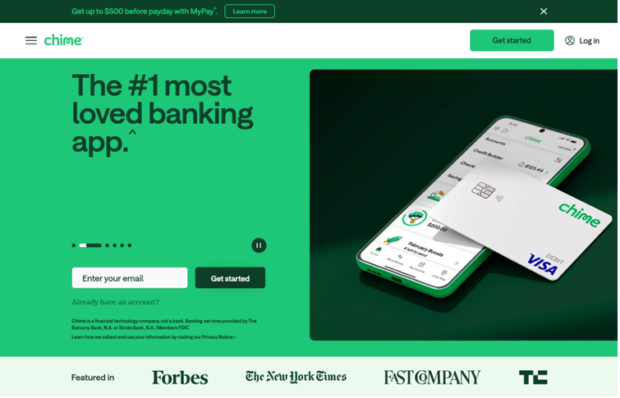
Chime’s brand is simple, clean and consistent across all touchpoints. The use of whitespace and clear visual hierarchy contributes to building trust among customers.
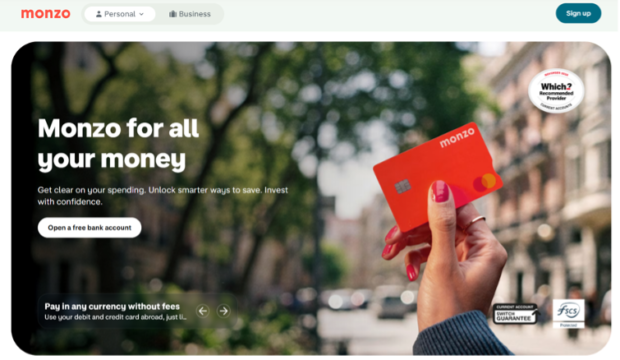
Monzo, the UK-based fintech, has a visual style that is bright, clean and modern. It is a reminder that financial brands do not have to live in a sea of blue or rely on overly corporate design. Monzo brings color and playfulness to its visual identity while maintaining professionalism, clarity, and trust. Its design choices reinforce accessibility and openness, helping build strong connections with new users.
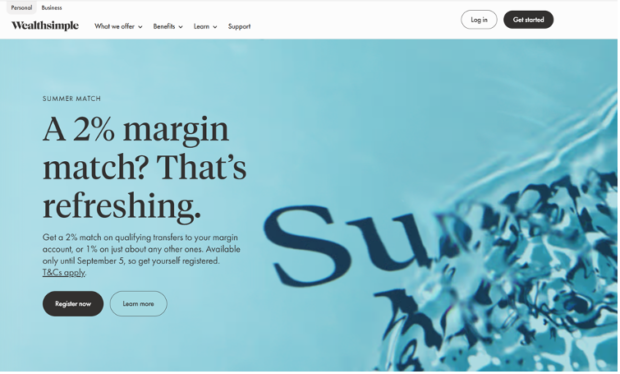
Wealthsimple has shown how design can be a strategic asset. Their cohesive visual design system has helped Wealthsimple stand out in a crowded market and attract younger investors who value transparency and ease of use.
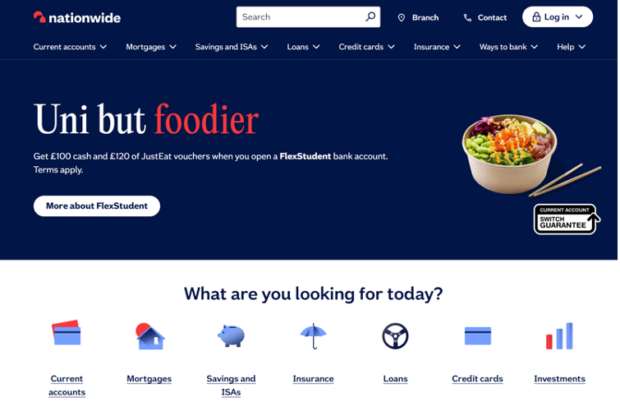
The rebrand of Nationwide (UK) in 2023 was the institution’s first major visual overhaul in four decades. The project modernized the bank’s identity while carefully preserving key elements of its heritage. The updated wordmark, simplified icon, refined color palette and thoughtful typography all contribute to a more approachable and trustworthy brand. The result is a clean, modern identity that feels both familiar and refreshed.
A Practical Starting Point for Improving Visual Trust
Not every institution needs a full rebrand to improve visual trust. In many cases, small, thoughtful changes to how your brand is applied online can make a significant impact.
If your institution is investing in a larger brand refresh, the focus should not be on chasing trends but rather building a visual identity that reinforces trust and reflects your institution’s values.
Refreshing a visual identity takes time, collaboration and alignment across leadership, marketing and design teams. But here are some easier, practical steps that can help move your brand in the right direction:
1. Audit your current digital presence
Look at your online presence — be it your website, mobile app, email templates or social channels. Review how your brand is currently being presented, paying close attention to consistency, clarity and usability. Are fonts, colors and imagery aligned? Does the mobile experience hold up? Are you relying on too much stock photography or legacy design choices that no longer serve the brand?
2. Refer to your brand guidelines
If your brand guidelines were created several years ago, it is worth revisiting them. Are they still relevant for today’s digital environment? Are they being applied consistently across all channels? Many institutions find that old guidelines were written with print in mind and need to be updated to reflect modern digital best practices.
3. Identify gaps between intention and execution
Even when brand standards exist, execution often drifts over time. Conduct an honest review of how your brand is showing up in real life compared to how it was intended to look and feel.
4. Prioritize improvements that support trust
Focus first on areas where inconsistent or outdated design may be undermining trust. This often includes typography, color usage, imagery, navigation clarity and mobile responsiveness. Tackle the highest impact fixes first.
5. Align design updates with business goals
Ensure that any design refresh is aligned with your institution’s broader business goals, customer experience strategy and brand values.
Trust is earned in every interaction, and today, many of those first interactions happen online. As customer expectations continue to rise, visual design has become a powerful tool for building trust in financial services.
While design alone cannot replace the need for ethical business practices and reliable service, it plays a critical role in shaping how customers perceive and trust your brand.
The real magic happens when design is not treated as an afterthought but is woven into your marketing strategy and broader business goals. When design is guided by clear insights and aligned with customer expectations, it can become one of the most effective ways to build trust and deepen customer relationships.
By taking a thoughtful, strategic approach to visual identity, financial institutions can strengthen digital trust and create a better experience for the customers they serve.


