
The Smartest Rewards Programs Now Begin with Everyday Spending
By Jessica Kendall, Contributor at The Financial Brand
Simple Subscribe
Subscribe Now!
Credit card rewards have become a surprisingly useful window into how consumers are navigating today’s economy. New research from USAA finds that cardholders increasingly value rewards for what they can do today rather than what they might fund someday. Instead of accumulating points for vacations or premium purchases, many consumers are redeeming them to offset the cost of groceries, gas, and other everyday expenses.
Key takeaway: Flexible earning and redemption options are becoming part of consumers’ financial management strategy, shaping which cards they use, how often they engage, and even which issuers they choose.
As rewards evolve from aspirational perks into everyday budgeting tools, banks have an opportunity to rethink how they design products, communicate value, and strengthen customer relationships.
Need to Know:
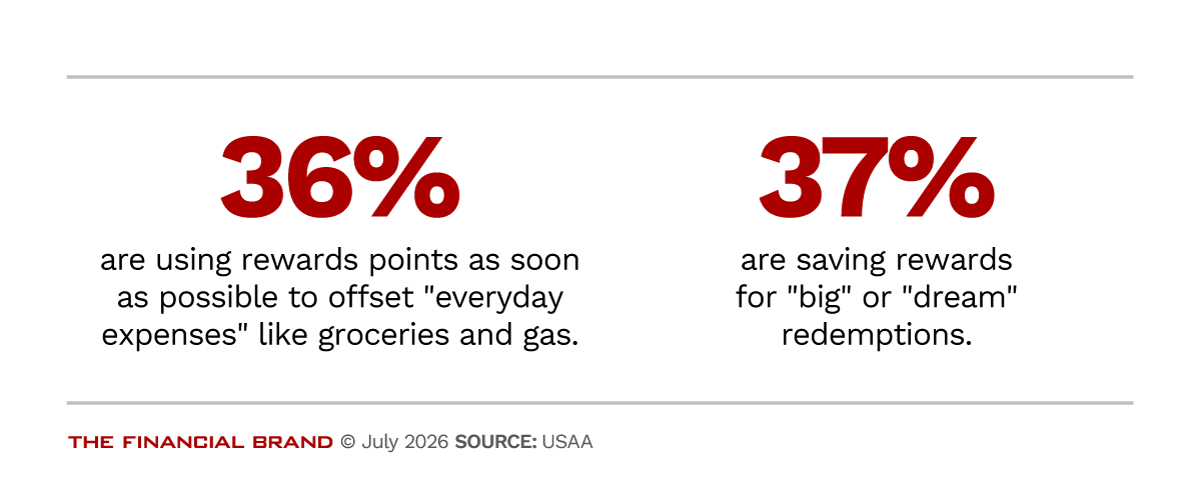
- Consumers increasingly use rewards to offset everyday expenses rather than save for travel or luxury purchases. 36% of consumers now redeem rewards to offset everyday expenses, nearly matching the 37% who save for larger purchases.
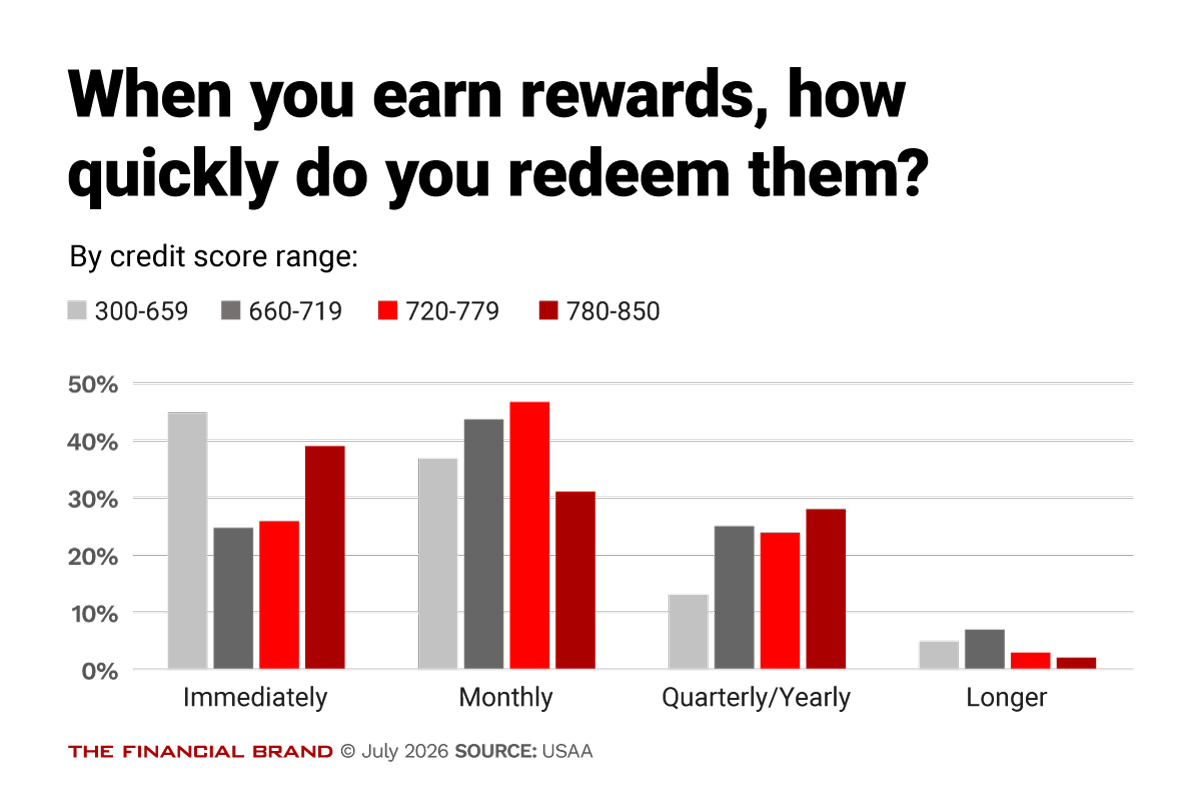
- 72% redeem rewards monthly or immediately rather than accumulating points over time.
- Flexible redemption options, including point-of-sale “Pay With Points” programs, are driving more frequent engagement.
- Rewards programs are evolving from marketing incentives into tools that support consumers’ day-to-day financial management.
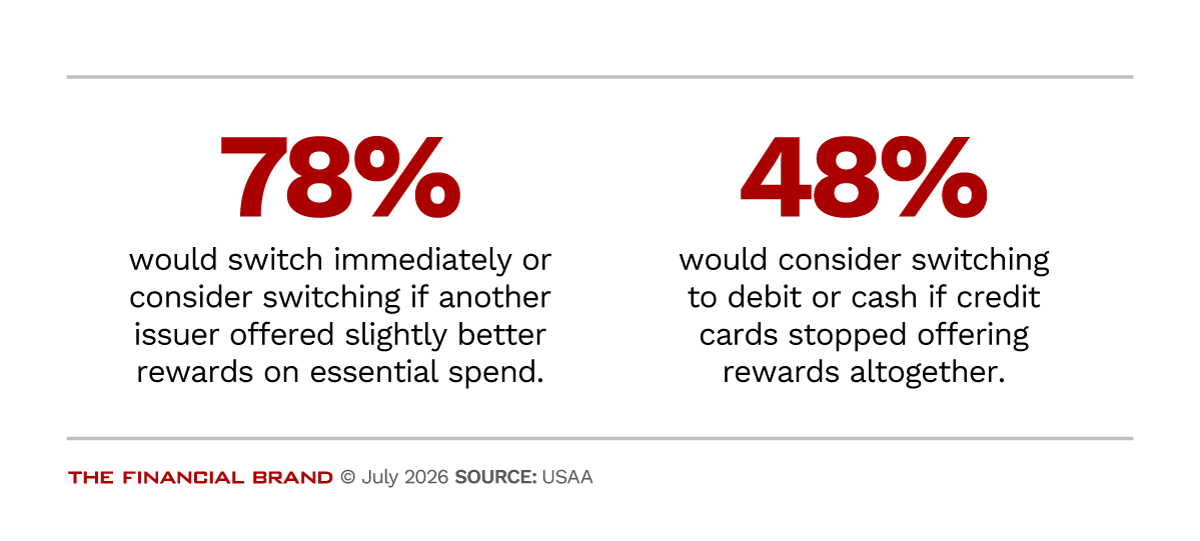
- 78% of consumers would immediately switch — or consider switching — to another issuer offering better rewards on everyday spending categories.
Credit Card Rewards Become Everyday Financial Tools
There was a time when rewards programs were built around delayed gratification. Consumers accumulated points for months or years before redeeming them for airline tickets, hotel stays, or premium merchandise. That model reinforced loyalty by encouraging cardholders to keep spending until they reached a meaningful milestone.
Today’s consumers appear to be thinking differently.
Instead of treating points as something to save, consumers increasingly see them as another resource available to help pay for groceries, gasoline, household essentials, and monthly expenses. The difference between consumers redeeming rewards for everyday costs (36%) and those saving for dream purchases (37%) has effectively disappeared.
This suggests rewards programs are becoming part of customers’ financial management strategy rather than simply a loyalty benefit.
The trend is particularly pronounced among younger consumers and households with lower credit scores — groups that are often more sensitive to rising living costs. But even consumers with stronger credit profiles increasingly use rewards to reduce routine expenses, suggesting the appeal extends well beyond financially constrained households.
Key takeaway: Moving forward, rewards that create value during everyday spending may resonate more strongly than those centered exclusively on aspirational experiences.
Flexibility Drives More Frequent Engagement
The report also illustrates how product design influences customer behavior.
As more issuers introduce point-of-sale redemption options, consumers no longer have to wait until the end of a billing cycle or log into a rewards portal to use accumulated points. They can apply rewards directly at checkout when purchasing groceries, filling their gas tank, or buying household items.
That convenience appears to be changing redemption habits.
Nearly three-quarters (72%) of survey respondents redeem rewards monthly or immediately after earning them rather than allowing balances to accumulate.
Meanwhile, USAA’s internal card data showed reward redemption volume increased 47% in 2025 compared with the prior year, while the number of monthly redeemers rose 28%. Much of that growth was attributed to the introduction of point-of-sale redemption capabilities.
Consumers are also redeeming smaller amounts more frequently. Rather than viewing points as something to preserve until reaching a large balance, many appear comfortable treating them as an ongoing discount on everyday purchases.
Key takeaway: More frequent redemption also creates more frequent interaction with the rewards program itself. Instead of engagement occurring a few times per year, flexible redemption options create recurring touchpoints that reinforce the value of the card every month — or even every week.
That ongoing reinforcement may prove just as valuable as the rewards themselves.
Everyday Value Shapes Loyalty
Rewards also strongly influence card relationships. According to the survey, 90% of consumers believe credit card rewards provide meaningful value.
More notably, 78% said they would immediately switch or consider switching if another issuer offered better rewards on essential spending categories such as groceries and gas. Nearly half said they would consider using debit cards or cash instead if rewards disappeared altogether.
Those findings suggest consumers increasingly evaluate cards through a practical lens. They aren’t simply looking for the highest headline reward rate. They want rewards that align with where their money actually goes each month.
For many households, everyday spending now represents the largest opportunity to realize value. Programs that reward grocery purchases, fuel, utilities, or recurring household expenses may therefore carry greater influence over card choice than benefits tied primarily to travel or luxury purchases.
Key takeaway: The report highlights another opportunity. Consumers with lower credit scores were significantly more likely to say they lacked a clear rewards strategy. While issuers have traditionally focused educational content on credit management, helping customers understand how to maximize rewards could become another way to strengthen engagement and perceived value.
What Banks Should Consider Next
The findings reinforce a broader shift occurring across financial services: products increasingly compete on how well they support customers’ everyday financial lives.
That doesn’t necessarily require richer rewards programs. It may require making existing rewards more relevant and easier to use.
Banks should evaluate whether redemption options match current customer priorities, particularly as more spending shifts toward necessities. Expanding point-of-sale redemption, highlighting rewards earned on everyday categories, and simplifying redemption experiences may create more value than adding another premium travel benefit that customers use once every few years.
Marketers may also want to rethink how they communicate rewards. For years, advertising has focused on aspirational experiences. While those messages still resonate with many consumers, they may no longer reflect the primary reason customers value rewards. Showing how points can immediately reduce a grocery bill or help offset rising fuel costs may better align with today’s financial realities.
Bottom line: Consumers still care about rewards but they’ve redefined how those rewards are used. Recognizing that shift could influence everything from card design and loyalty strategy to marketing and customer engagement in the years ahead.


