
It’s Time For Banks To Tackle Bill Management
The typical American are hemorrhages $600 per year on subscriptions they don't even remember signing up. Consumers are desperate for a lifeline. Banks have 12 to 18 months before subscription management becomes table stakes. Miss this window, and watch customers flee to whoever throws them the rope first.
By Kurtis Lin, CEO & Co-Founder, Pinwheel
Simple Subscribe
Subscribe Now!
In today’s digital-first world, subscriptions have quietly taken over our lives. From streaming services and meal kits to fitness apps and cloud storage, consumers now juggle dozens of recurring charges — many of which they barely remember signing up for. The “subscription economy” has not just expanded — it has exploded — and consumers are in dire need of solutions that put them back in the driver’s seat.
Want more insights like these? Check out Pinwheel’s content hub: Primacy in the Digital Age
Subscription Overload is Now a Crisis
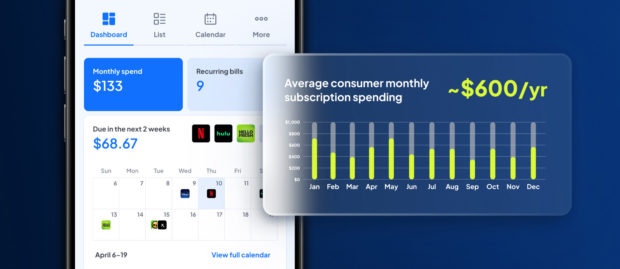
According to recent studies, the average U.S. consumer spends over $270 per month on subscriptions—often without realizing it. Services that once required a one-time purchase now charge monthly or annually. While this model provides convenience and continuous updates, it also introduces financial ambiguity.
Many people sign up for free trials, intending to cancel before billing starts, but forget. Others subscribe to overlapping services (e.g., multiple streaming platforms) or hold on to apps they no longer use. The result? The average consumer is now spending around $600/year on unwanted subscriptions. This is exceptionally shocking, with US News reporting that nearly half of Americans live paycheck to paycheck and 2 out of 5 do not have an emergency savings fund.
The Behavioral Economics of Subscription Businesses
Subscription services thrive on inertia. Once a consumer is signed up, companies hope they stay subscribed — not necessarily because they continue to use the product, but because canceling requires effort. This phenomenon, known as the “set-it-and-forget-it” trap, is what makes managing subscriptions a critical consumer need.
But subscription services have taken it even farther than that in their pursuit for profitable growth. Intentionally opaque billing practices, complex cancellation policies, and buried terms of service make it nearly impossible for consumers to stay in control of what they’re paying for. Even financially responsible consumers are spending above their means, despite their best efforts to manage their budgets. The crisis has gotten so extreme that the FTC has issued a “click-to-cancel” rule in response to the thousands of complaints they have received from consumers who have been unable to cancel unwanted subscriptions.
Another Subscription Industry Is Born
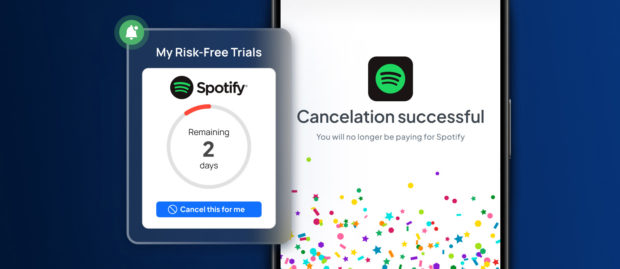
The crisis created by subscription businesses has paved the way for an entirely new industry: subscription management solutions. Subscription management platforms have emerged as essential financial wellness tools, with apps like Rocket Money, sold to Rocket companies for $1.3B in 2021, purporting to help users track, manage, and cancel subscriptions from a central dashboard…for another monthly subscription fee.
Rocket Money states they have over five million users paying $6 to $12/month and our own consumer research shows at least 30% of Americans are paying for a subscription management service.
Why Should Banks Get in the Game?
In an age of increasing economic uncertainty and rising costs, banks will be expected to fulfill their promise of helping customers achieve better financial outcomes. Subscription management is now a critical budgeting tool with the potential to save customers as much or more than a free checking account or a loan refinance. Adding subscription management to your account services will help your customers budget smarter and align their expenses to their values and needs.
Bank financial advisors are increasingly recommending that clients audit their subscriptions quarterly. Some are even suggesting setting a “subscription cap” as part of their financial wellness customer check-up processes. But this advice is no more than lip service, when much more sophisticated tools are available to comprehensively meet consumers’ needs.
Solutions give control back to consumers by:
- Algorithmically identifying recurring charges
- Exposing unused or forgotten subscriptions
- Tracking & monitoring subscription payment deadlines and renewal dates
- Alerting users to upcoming milestones
- Simplifying cancellation processes
- Negotiating more favorable terms for subscriptions they need
And if you’re still wondering why banks should be the ones to offer bill management, our 2025 Consumer Banking Sentiment survey revealed:
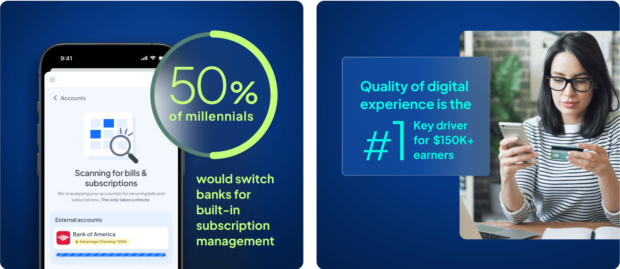
- Quality of digital experience is the #1 decision factor when selecting a primary bank for consumers across every generation earning $150k or more
- 50% of Millennials and Gen Z say they are willing to change banks to get embedded subscription management services
The question every financial institution should be asking themselves is “how quickly can we implement a bill management solution?” Whether or not to invest is a moot point.
Early Adopters Will Reap Rewards
A real-world example: A financial institution wanted to grow their base of premium customers by offering a unique digital experience. This financial institution introduced a bill management system to a 200k test population as a freemium trial. More than 28% customers adopted the offering, taking advantage of its ability to auto-identify hidden subscriptions, monitor renewal and payment deadlines, and execute 1-click cancellations of any unwanted services. Fully 12.9% of trial users upgraded to the financial institution’s fee-based premium account for continued access.(You can access more information on this financial institution’s successful pilot here.)
Final Thoughts
Subscription models aren’t going anywhere. They’re convenient, scalable, and deeply embedded in the way we live now. As even more services continue to shift to subscription models — think cars, clothing, even pet care — the need for robust subscription oversight will only grow. In this landscape, solutions that help consumers regain clarity and control over their financial commitments are more than useful — they’re essential. We predict within 12-18 months, embedded bill management will be table stakes for banks and credit unions of all types, from banks to digital wallets.


