
Will Dizzying Card Fees from Chase, Amex Spark a User Uprising, Create Openings for Other Issuers?
By Steve Cocheo, Senior Executive Editor at The Financial Brand
Simple Subscribe
Subscribe Now!
Executive Summary
- Two longtime card rivals, Chase Sapphire Reserve and American Express Platinum, have upped the ante in two ways: Trendy benefits and higher fees.
- Popular among Gen Z and Millennials, these elite programs are suffering from a perception that they are “coupon books” in industry parlance — stuffed with perks that sound cool, but can be challenging to cash in.
- Will some existing cardholders drop to lower-level but cheaper perk cards? And does the battle create opportunities for Capital One and even regional players anxious to retain customers?
The first shots have been fired this summer in a renewed high-stakes battle over the wallets of consumers willing to fork over sky-high annual fees for cards that offer bundles of benefits and bonuses
Some observers fear that the two players’ higher fees may be one notch too high for present or potential cardholders — and that that could create opportunities for lower-priced alternatives. Intriguingly, some suggest that one of the motives for the higher fees is a need for better rationing of some of the key perks offered, such as access to airport lounges.
The main battle concerns American Express and its Platinum Card versus the Chase Sapphire Reserve Card, though other premium cards, notably Capital One’s Venture X, are also in the fray.
In addition, as payments and card experts point out, co-branded rewards credit cards, especially those that appeal to travel-oriented consumers or business card holders, are also combatants for those consumers with high brand preference in the travel space.
Platinum Versus Sapphire: Battle of the Brands
“Refreshes” have come to be eagerly anticipated events in the world of cards, but none moreso than the Chase and American Express announcements this summer, much worked in the rumor mill before the official previews.
American Express put out the first press release in mid-June, but dwelt mostly on broad strokes and few specifics. One example is its plan to open additional Centurion Lounges in 2026, upping its own count to 32 worldwide, a subset of access provided to more than 1,550 lounges in hundreds of airports globally. Similarly, the card giant highlighted acquisitions it has made to expand its hotel and restaurant networks. Specifics on these and more features — as well as a hike from the current annual fee for consumers of $695 — will be released in the fall.
A week later came JPMorgan Chase’s announcements about Chase Sapphire. The bank also promoted the offer with celebrity marketing, including supermodel Claudia Schiffer, comedian Ben Stiller, and other notables.
Among the new Sapphire Reserve perks is Points Boost, which allows Sapphire Reserve customers to as much as double certain rewards points for redemptions with Chase Travel. This applies to rotating offers. Multipliers at various levels are offered on points, as well as an annual credit of $500 for hotels on the bank’s curated list and a $300 dining credit, on top of a continuing $300 travel credit that’s considered a jewel in the Sapphire Reserve package. Also included are monthly credits with some brand partners and annual credits on others. On the other hand, the annual fee jumped to $795 from $550.
Chase says that if cardholders avail themselves of everything on offer, they can realize more than $2,700 in value.
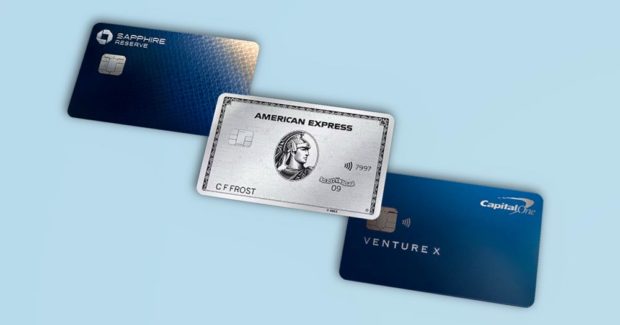
Peter Davey, principal at PaymentsJedi Advisory, says a friend of his recently signed up for the Chase Sapphire Reserve Card … and days later received the news that the annual fee was going to rise by about 45%.
Initially the friend was surprised, to say the least. Then he did the math and worked out that if he tapped all of the benefits Chase offers, then it would probably be worth the near-$800 charge.
Davey thinks the moves will divide users into three categories, at this price level, a framework that will likely also apply to the refreshed Platinum Card:
- One group won’t see the perceived benefits at the new price and will cancel their cards.
- Another group will, like his friend, dig into the fine print and work out that they can squeeze enough to make it pay off.
- Finally, there will be those “who don’t really care about the high annual fee. They will just pay it, regardless, because they want the notoriety of having that card product.”
Read more: Bundling Debit with BNPL Is the Next Big Thing in Cards
High-Priced Cards and Gen Z ‘Henrys’: Will the Magnetism Continue?
For a long time, the elite category belonged chiefly to American Express, which launched Platinum in 1984. But in 2016 Chase unveiled the inaugural version of Sapphire Reserve.
“When it came out it was really champagne travel on a beer budget,” says Ted Rossman, senior industry analyst at Bankrate. “When it started the then-$450 annual fee had some sticker shock associated with it. But that $300 travel credit basically reduced the cost to $150. Cardholders got other perks like the lounge access and the ability to skip airport security lines. So, there was mass appeal, and it was a really big shot across the bow that poached a lot of customers from Amex Platinum.”
This time around, Rossman says the rumor is that American Express might hike its own fee to $800-$900, reflecting a school of thought that American Express will price above Chase Sapphire Reserve to retain a “top of market” perception.
Nonetheless, Rossman wonders if both offerings are passing a pain point.
“It’s not champagne travel on a beer budget anymore,” says Rossman. “It’s champagne travel on a caviar budget.”
This apparent shift is a departure for Chase, according to Andrew Davidson, SVP and chief insights officer at Comperemedia, a Mintel company. When it introduced Sapphire Reserve, he says, it was working from a different playbook than American Express.
“Chase was focused on value,” says Davidson, which hit home with Millennials back in 2016.
Now, Davidson says, his company’s research indicates that this message is appealing to both Millennials and Gen Z — many of latter are now old enough to qualify for credit cards.
At one time, many people sought out no-annual fee cards, but that’s changed, he says.
Davidson says that 76% of Gen Zers and 68% of Millennials surveyed by his firm say that a higher annual fee is worth it for the right levels of rewards. By contrast, only 31% of Gen Xers feel that way, and only 19% of Baby Boomers. Gen Z and Millennials account for a growing portion of card spending now. Davidson notes that American Express recently indicated that those generations account for over 60% of new consumer accounts acquired globally.
But for Gen Z, says Davidson, there’s more than a value play going on, especially for Gen Z “HENRYs” — high earners, not rich yet.
“It’s really about aspiration,” says Davidson. “These consumers aren’t rich yet, but they’re aspiring to get there.” In fact, those with some wealth (but not buckets of it) are willing to pay more for a card with better rewards than are people with over $1 million in investable assets, according to Mintel’s data.
Read more: Why the Capital One/Discover Deal Is About Much More Than Payments
Food, Travel, Experiences, and Heavy Metal
It’s no accident that travel is a key part of the Chase and American Express offerings, as well as Capital One’s Venture X.
“We live in an instant gratification society today, so it’s not surprising that people would rather have their benefits now than wait 10 years,” says Davey. Millennials and Gen Z want to travel now, he says. “So I think the card companies are generally playing on the right string emotionally.”
Bankrate’s Rossman points out that many of the tie-ins for such cards appeal to “foodies, travelers, people who like ‘experiences.’ That’s definitely part of the marketing ethos behind both Sapphire Reserve and the Platinum Card.”
Davey points to Capital One commercials for Venture X, featuring actress Jennifer Garner. “Gen Z is saying, ‘Oh, wow,’ that person just went to seven different places and they’re doing it because they have the Venture X card.”
Will the willingness of younger consumers to pay for special rewards and benefits make this strategy trickle down to, say, regional banks? Experts point out that the card business is highly concentrated, and say that they haven’t seen much movement in this regard so far. Yet, Davidson thinks regional banks have tired of seeing major players snap up their best customers and will attempt to cut off this encroachment with better card deals.
One player that recently made a move in this direction is Citizens Bank. As part of an across-the-board revamp of its card programs, Citizens, which historically did not charge annual fees, introduced its Summit Reserve Card, which features some of the services the major players’ cards do. This includes airport lounge access, unlimited cash back, concierge services and more.
The bank also issues this card in metal — which is how Sapphire Reserve and Amex Platinum come. In an earlier article on The Financial Brand, Adam Boyd, head of lending at the Citizens, explained that this feature and the overall product design were aimed squarely at higher-income Gen Z prospects. The Summit Reserve card carries a price of $295 that can be discounted to $95 if the cardholder maintains a qualifying account in its Quest Checking mass affluent service.
Davidson says Mintel’s research indicates that the physical appearance of a card is important to 64% of Gen Z and 68% of Millennials, falling much further for older generations — 45% for Gen X and 22% for Boomers.
Read more: How Regional and Community Banks Can Compete (And Win) in Payments
‘Coupon Books’ and ‘Gym Memberships’: How Much Value Will Cardholders Really Get?
Value has been a key selling point for Chase Sapphire, and even with its prestige, American Express has periodically refreshed the platinum offering to stay on the leading edge.
But lurking behind the aggressive marketing is a term multiple experts interviewed used for such bundled card offerings: “coupon book.”
Davidson makes the point that some of the benefits of Chase Sapphire Reserve are only of interest to people who use a particular company’s goods and services. For example, there are credits for Equinox and SoulCycle, both fitness chains.
“If I don’t go to Equinox, it’s not something meaningful for me,” says Davidson — just another useless coupon.
Rossman criticizes some of the features being added to Sapphire Reserve as being made available “in dribs and drabs.” For example, the program promises $120 a year in Lyft in-app credits — but only $10 per month.
From the viewpoint of the companies participating in this part of the card offering, “it’s smart business, because it keeps you spending,” says Rossman. “But it’s not the same as getting that $300 travel credit.”
“I think it’s getting harder to take full advantage of these perks,” Rossman adds.
In fact, payment consultant Richard Crone says such programs, especially where they have rotating aspects, can be troublesome.
“Gen Z cardholders are overwhelmed by the cognitive burden of tracking rewards, changing categories, and redeeming benefits — further driving down their personal return on investment from paying for high-fee rewards cards,” says Crone, of Crone Consulting LLC.
In fact, Crone says his research indicates that Gen Z consumers aren’t getting nearly as much out of high-fee card programs as they expected to.
“I estimate that fewer than 20% of Gen Z credit card holders utilize more than one-fifth of the bundled benefits associated with high-fee premium cards,” says Crone. “Gen Z consumers rarely maximize travel perks, roadside assistance, or rotating cashback categories due to the friction and fragmentation in managing those features.”
Crone actually considers such cards to be “very expensive gym memberships” for Gen Zers, for two reasons.
First, much like actual gym memberships, the initial enthusiasm doesn’t last. Crone says if all cardholders actually showed up at the “gym,” the economics of offering such programs would change for the card issuers.
Second, many users of these cards maintain running balances at high rates. He says Gen Z averages around $2,900 in card balances. Often their credit isn’t strong enough to enable them to engineer a cheaper deal via a balance transfer. This is especially so if they have had some “credit hiccup” as they’ve learned to use consumer credit, according to Crone.
Often, he finds, many consumers don’t think things through when they enroll in such programs. They see a feature they like and go for it.
“Nobody does the math,” says Crone.
Rossman says for consumers who already use multiple participating providers, the math can work out.
“But if it’s something that’s going to force you to change your habits, or if you’re spending $50 on takeout food to save $10, I don’t know: Did you save $10 or did you spend $40?” he asks.
“I think even among enthusiasts, some of the recent changes are making people do a double-take and think, ‘$795 is a lot to absorb for a credit card. Is it worth it?’,” says Rossman. He thinks some cardholders will look at other cards that aren’t as costly and that dovetail with their specific interests.
“It speaks to different tiers of loyalty,” Rossman says. “I think there is going to be some reshuffling of this space.”
And Capital One’s Venture X, while its offerings aren’t as extensive as those of Chase and Amex, is cheaper at $395.
“A lot of people find value in that,” says Rossman.


