
How Ally Aims to Push Its Primacy Appeal with Checking and a New Rewards Program
By Steve Cocheo, Senior Executive Editor at The Financial Brand
Simple Subscribe
Subscribe Now!
Ally Bank has been undergoing a strategic shift on the deposit side, from a focus on savings products to a broader mission, adding more emphasis on checking to drive more relationships in a bid to build primacy.
“We want more ‘Spending’ accounts, with more interaction,” says Andrea Brimmer, chief marketing and public relations officer. She explains that the strategic change meant reassessing key elements of its marketing approach, especially for the Millennial and Gen Z customers who represent about 70% of Ally’s base.
“We asked, ‘What are the things that are important to consumers in a bank that they have a primary relationship with?’,” says Brimmer.
Key insight: One of the essentials turned out to be a rewards and benefits program — which Ally had not had up until now.
There were some caveats.
One, it had to be painless, no hassles or hurdles. Second, Ally realized that it had to be fee-free. Finally, the bank had to be committed to constant refreshing of the offerings in order to maintain appeal to its targets.
Key insight: “This younger generation is somewhat financially promiscuous,” says Brimmer. “They have up to six or seven banking relationships, which is pretty staggering. A lot of that comes from them chasing incentives, opening accounts and doing the minimum in order to garner those incentives.”
Need to Know:
- Ally Bank, the country’s largest all-digital bank, has rolled out “Loyally,” its first-ever rewards and benefits program.
- The program serves as the spearpoint leading a push for more checking account openings, and more primary relationships among the bank’s key demographics.
- About 70% of Ally’s new deposit accounts come from Millennial and Gen Z customers, with starting average balances of roughly $10,000. Deposits comprise 87% of the bank’s total funding.
- At the end of the second quarter, the bank had $144 billion in deposits. Ally is the 23rd largest U.S. bank by assets, as of the end of the second quarter.
Brimmer says Ally leaders have set very aggressive growth goals for 2027 and the new loyalty program is integral to that push.
She adds that the hope is that Loyally will drive lower acquisition costs, with more efficiency, versus traditional paid media channels.
Ramping Up Ally’s Rewards and Benefits Framework
Loyally went through a pilot last May and in late September the bank completed its national rollout.
Depositors, investment customers and auto loan borrowers are eligible for membership. Participation doesn’t require a minimum balance and the program doesn’t rely on a points system.
Key insight: “Something we heard from consumers was that they don’t want a membership or loyalty program to turn into a full-time job,” says Brimmer. Tracking points and worrying about points expiring is a turnoff. Likewise, going through machinations to link services in order to earn points is unpopular.
Broadly, the program provides benefits in multiple categories:
- Discounts, brand drops and free subscriptions are available via partnerships with major brands. Among the initial group are Spotify (entertainment), Instacart+ (shopping), Booking.com (travel), Trust & Will (legal aid), and Airvet (pet telehealth).
- Cash rewards are available based on customer referrals and opening of new accounts.
- Experiences are available to receive tickets and VIP access to major sport and entertainment events.
- Access to “Ally Houses” at certain events, including exclusive opportunities to hear celebrity speakers and receive branded merchandise.
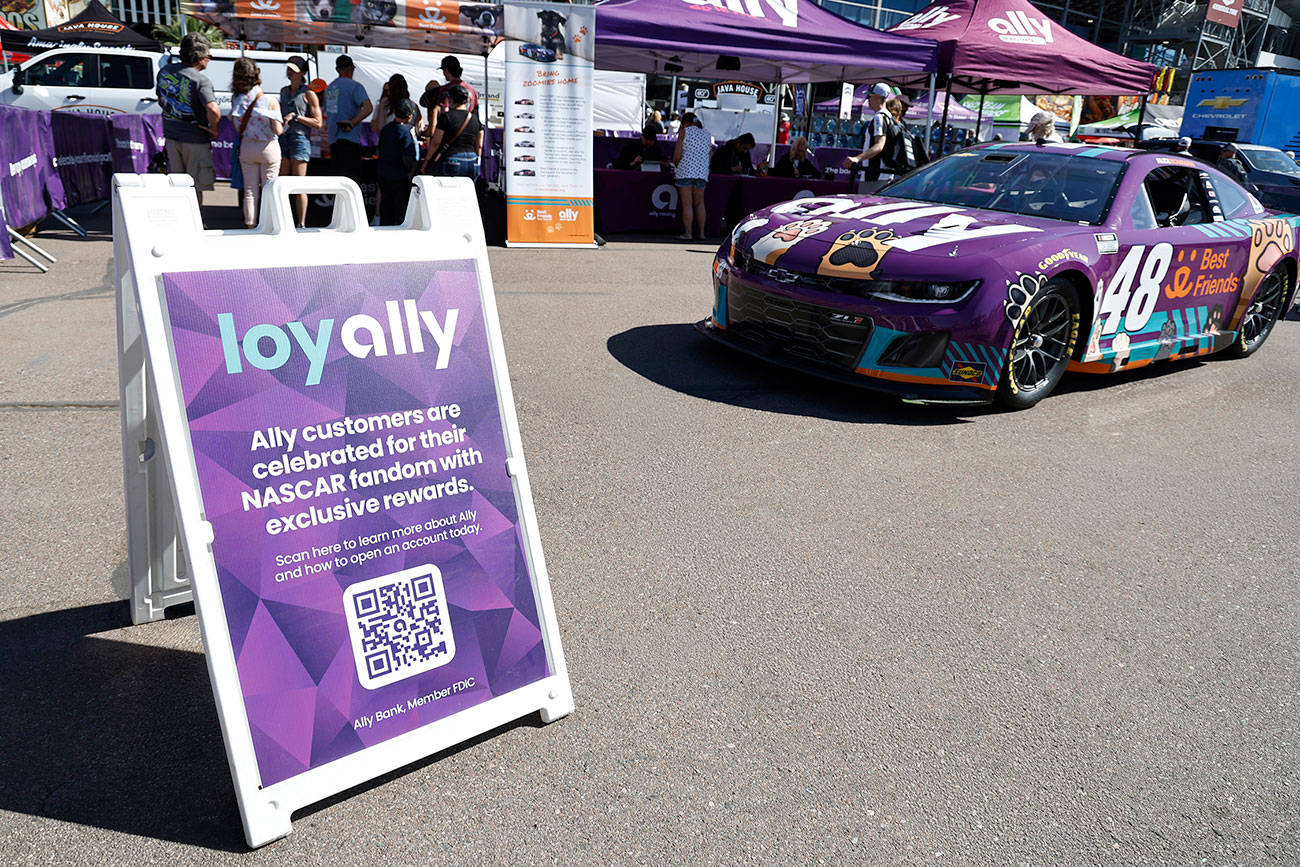
Shooting the QR code and providing some data gets Loyally members into special venues sponsored by Ally.
The bank intends to add new rewards with partners and other providers in entertainment, travel, dining and additional lifestyle categories. Particular attention is paid to the types of services and products that Millennials and Gen Z spend on, according to Brimmer.
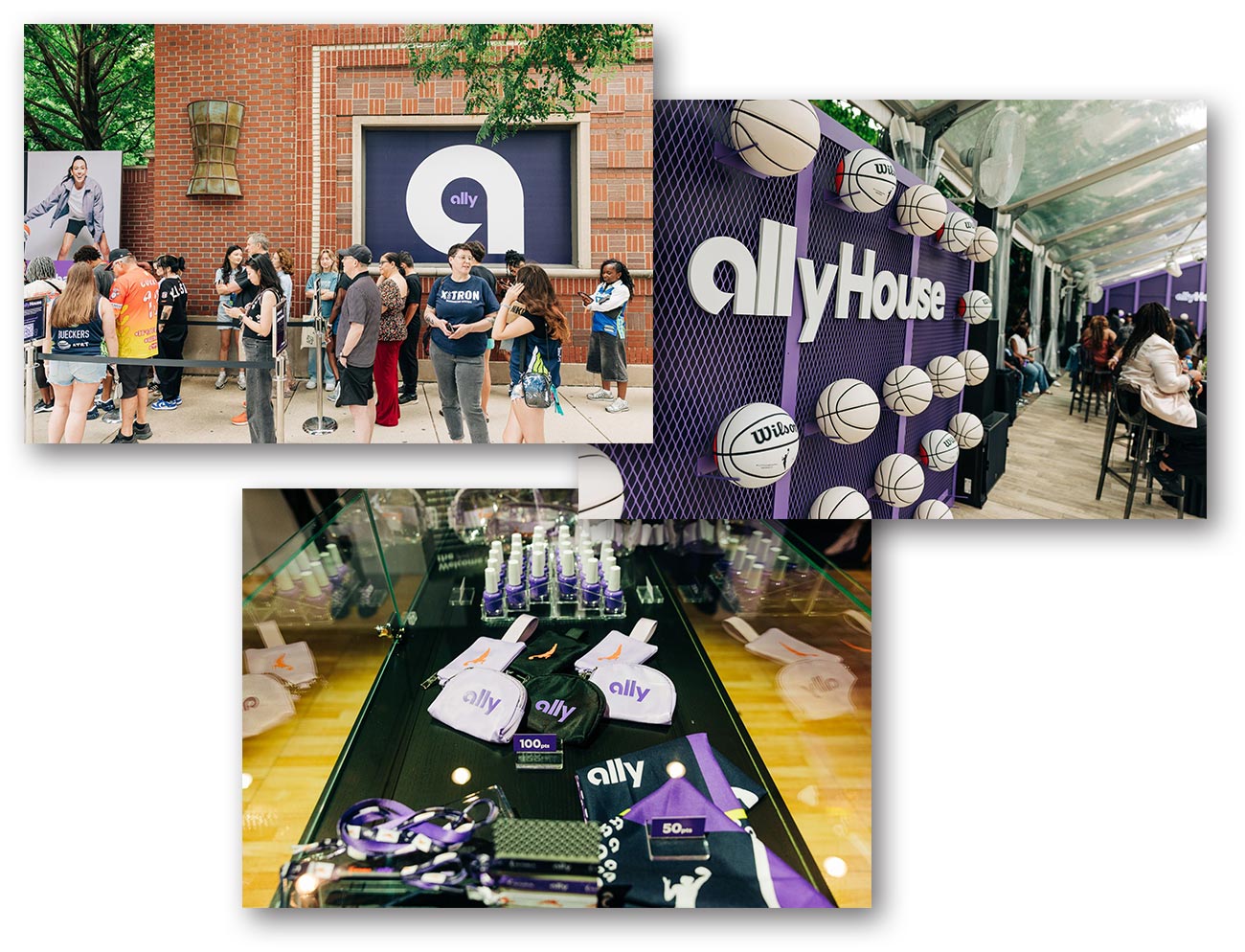
Ally Bank’s “Ally Houses” at various events give additional access — and merch — to Loyally members, who may also score special tickets at related events.
Read more: How BofA’s Rewards Bet Is Changing the Loyalty Equation
Putting Rewards on Autopilot
Another consumer turnoff is “having to sift through all the rewards that might be applicable,” according to Brimmer. For the bank’s targets, the prospect of tracking points on a spreadsheet or digging layers deep on a site for benefits is a nonstarter.
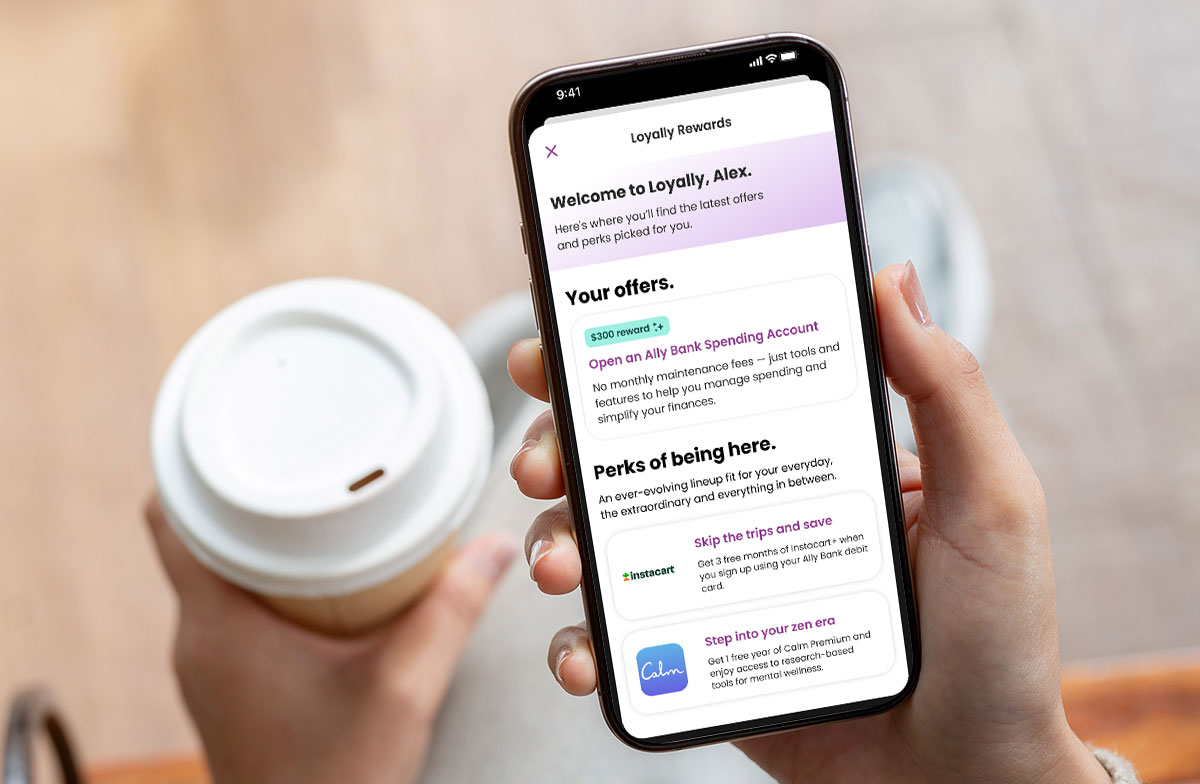
Loyally rewards and offers are surfaced to Ally Bank customers right in its mobile app.
In response, Ally incorporated Loyally into its banking app. Customers receive personalized messages about perks, discounts and more that relate to their needs and preferences.
Brimmer says they can tap on the Loyally logo and see rewards and offers that are available, which ones they’ve already tapped, and which ones they can still take advantage of. (Matching offers to specific customers will grow more sophisticated as AI in development is finalized and activated, according to Brimmer.)
Read more: How to Navigate a Credit Card Market Polarized Between the Affluent and the Stressed
Promoting Ally Rewards Opportunities in the AI Age
A key element of promoting Loyally has been customer relationship management, tapping data to reach people. Visitors to the Ally Houses, for example, snap a QR code and upload their email address to gain admission. The bank has also relied on social media posts.
“We’ll probably get into paid media soon,” says Brimmer. “I want it to be a little bit bigger, with more partners on the platform.”
What can’t wait is ensuring that the bank has visibility with LLMs, which people increasingly use for search and suggestion in financial services. Ally has been developing capabilities in Generative Engine Optimization (GEO, also known by other acronyms) to make it more visible to AI.
Brimmer says her team tracks the bank’s visibility for nearly 400 key prompts and pushes to make sure the bank lands in the top three sources cited. Among the tools the bank uses is Scrunch, which helps track what content is being searched for by large language models (LLMs).
This ties into the bank’s content marketing strategy.
“We determine if we have to make any adjustment to our content, and what new content we have to put out in order to be able to show up appropriately,” says Brimmer.
She says much groundwork has been laid to promote Loyally in this way, so that Ally will show up when a consumer asks AI to recommend the best bank loyalty programs.
Reality check: “It’s very deliberate, but it’s not a one and done,” Brimmer explains. “I call it ‘feeding the beast.’ It’s about consistently pumping out content so that you are updating on changes, adding information when we have new partners and perks.”
She adds that the bank’s team must also work to put out content where the models are searching.
“And we also have to ensure that we’ve got the appropriate amount of information in our own non-authenticated space within our storefront, so the bots can reach it,” Brimmer says.
One such location is the bank’s Conversationally pages. Topics chosen align with the type of content that the models appear to be looking for.
“This has changed content strategy quite a bit,” Brimmer says. The process had been driven by human perception of what consumers are searching for, or, at least, a conception of what people might be interested in.
Now, Brimmer says, “It’s much more about data that’s informed by what’s actually happening as a result of LLMs’ behavior.”
Read next: Why Citibank Integrated Retail Banking and Wealth Management to Build Primacy


