
Master All Six of the New Pillars of Banking Loyalty
By Corey Wrinn, Managing Director at Rivel Banking Research
Simple Subscribe
Subscribe Now!
Need to Know
- Many banks and credit unions have traditionally staked their brands and reputations on excellence in one specific product or market.
- But new research reveals that retail banking customers bestow their loyalty – and select their primary financial institutions – based on their experiences across multiple products and dimensions.
- Delivering on six specific criteria is critical to building long-lasting, profitable customer relationships over time.
For decades, financial institutions have built their competitive advantage on balance sheet strength and individual product performance. But Rivel Banking Research’s comprehensive analysis, spanning six waves of research and over 550,000 customer responses, reveals a shift in what drives consumer loyalty today.
Our extensive data analysis identifies distinct loyalty drivers for different customer segments. For retail customers, six key experiences emerged as critical:
- easy-to-use online banking
- deep understanding of customer needs
- good value for fees
- attractive loan rates
- comprehensive product offerings and
- high-quality branches.
This research confirms what leading institutions have discovered: Success no longer comes from excelling at isolated products, but from orchestrating an interconnected customer experience ecosystem that addresses the specific priorities of each customer segment.
The data suggests that banks and credit unions that understand and optimize these research-backed loyalty drivers are positioning themselves to thrive in an increasingly competitive landscape.
Learn more from Corey Wrinn at
The Financial Brand Forum 2026.
Don’t miss Corey’s breakout presentation on Winning Consumer Confidence & Trust in the Age of AI — a session loaded with proven strategies and real-world examples you can put to work immediately.
Meet Corey in person live at the Forum 2026, and see why he’s one of our all-time top-rated speakers with sessions that are standing-room-only!


Here’s how the most successful institutions are translating these insights into actionable strategies.
Want more insights like this? Check out Candescent’s content portal: Illuminating Insights in Digital-First Banking
1. Easy-to-Use Online Banking: Digital Frictionless Experience
In the modern ecosystem, the digital channel is the primary bank branch for most consumers. Rivel’s previous research has shown that consumers visit a branch on average of about four times per year. This means they’re now expecting a seamless, intuitive and feature-rich online and mobile experience. This pillar is foundational to daily engagement, especially when one of the most traditionally thought-of branch drivers was opening a new account. Now more than half of consumers are doing that online.
First National Bank out of Pittsburgh doesn’t rely solely on its brick-and-mortar footprint. It leverages its digital platforms to make an extensive range of their products easily accessible to all customers, including specialized services for segments like physicians and students.
FNB’s key differentiator is its eStore, which simplifies the often-complex process of finding and applying for financial products. This digital storefront organizes offerings around customer goals, such as “Pay for Education” or “Buy or Build a Home,” allowing users to browse, research and complete applications through one streamlined process. By fusing its comprehensive, full-service capability with this user-friendly digital application experience, FNB effectively marries the depth of a large regional bank with the convenience and simplicity expected by modern consumers, all online.
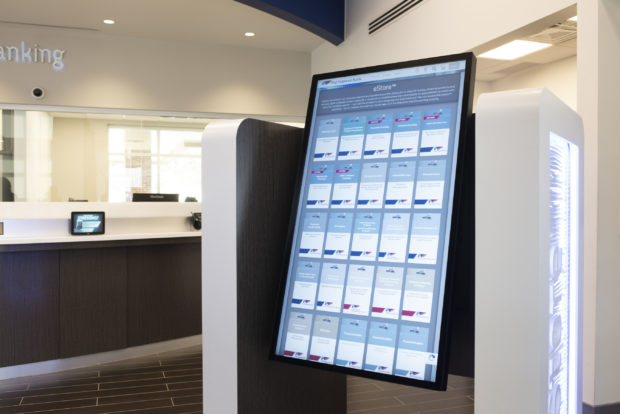
First National Bank’s eStore
2. Understanding Customer Needs: Hyper-Personalization
Customers want to feel recognized and that their financial institution is a partner, not just a vault for their savings. This pillar is about using data and technology to deliver proactive, personalized guidance and recommendations that anticipate the customer’s next financial move.
Financial institutions can leverage data analytics to proactively identify early signals of significant life events, such as changes in spending patterns, credit activity or account behaviors that often indicate evolving financial needs. For example, a credit card balance increase for furniture and home goods or a credit pull for a realtor, an institution should be proactively reaching out on a targeted, personalized digital offer for a first-time homebuyer seminar or mortgage prequalification.
Banks and credit unions have been more actively guiding members and customers through complex financial journeys, like setting up retirement accounts or determining savings for a new child. Timely and relevant outreach proves the institution understands and cares about their evolving needs, keeping them involved in cross-sell and deferring attrition to other options.
3. Good Value for Fees: The Deciding Factor
This pillar addresses the customer’s expectation that the cost of banking services is fair and transparent relative to the benefits received. In an era of increasing digital and challenging bank competition, hidden or excessive fees are a major driver of attrition. Institutions that succeed within this pillar use their operational structure to pass explicit value back to the customer.
Delta Community Credit Union in Georgia offers a “Payment Holiday,” which is essentially a “Skip-a-Payment” option on certain loans. Members with specific loans (like auto or personal loans) can skip a monthly payment once or twice a year for a small fee.
4. Attractive Loan Rates: The Financial Advantage
While rates are driven by market conditions, the perception of an “attractive” rate is a significant loyalty driver, particularly for major purchases like homes and vehicles. Institutions must ensure their pricing remains competitive, especially for their most loyal customers.
Santa Cruz Community Credit Union is offering a new auto loan discount program offering a rate reduction for loyal members who pay off loans and return for new ones. This initiative rewards profitable members and competes more effectively with loan pricing across their California trade area.
By directly linking better rates to positive member behaviors, such as timely repayment and recurring business, Santa Cruz Community Credit Union can differentiate itself from larger banks or digital-only lenders that may not offer personalized rewards. This approach not only helps members save money on future loans but also encourages them to maintain an ongoing relationship with the institution, increasing the likelihood that they will bring additional business, such as mortgage, personal loans or deposit accounts over time.
5. Comprehensive Product Offerings: The One-Stop Solution
Loyal customers prefer to consolidate their financial life with one trusted provider. This pillar goes beyond basic checking and savings, requiring a full suite of products that can meet customers at every life stage, from a first student loan to wealth management.
America First Credit Union, based in Utah, has solved a problem many institutions ignore: making checking accounts genuinely valuable. Their Premium Checking bundles identity theft protection and mobile device coverage as standard features, not add-ons, for minimal or no monthly cost. Because of this members are choosing to make the credit union their primary and add other solutions over time.
This strategy drives relationship depth through design. AFCU’s Premium Account Payback program increases rewards as members add products like auto loans, mortgages or credit cards. Each new relationship elevates their tier and unlocks better cash-back returns, for example. Members see more value the more they engage with the credit union.
Beyond direct financial security in checking accounts, AFCU fosters member loyalty through unique, experiential perks that cater to its local community. Members gain access to an array of exclusive member deals and discounts for shopping, travel and, notably, offers towards local sports franchises like the Utah Jazz and Real Salt Lake. This combination of practical, high-value benefits and fun, locality-specific rewards make the membership sticky.
6. High-Quality Branches: Modern Advice Hubs
While transactions shift online, the branch is far from dead. It has simply evolved. This pillar is about transforming the physical space from a transactional counter into a high-quality, welcoming and technology-enabled financial advice hub. Many super regionals, such as PNC, have grasped onto branch expansion benefits, announcing many renovations and new builds over the next few years. Community banking options need to shift from scale to ensure local connections in order to compete.
Northwest FCU (VA) recently built a branch in Metro D.C. intended to do exactly that—technology to compete with the bigger banks but features that tie to their members’ needs.
The newly renovated branch features a 20-foot digital display wall that presents dynamic imagery and messaging, visible from outside the facility. Additional enhancements include a promotional display showcasing top products and rates, a dedicated digital community board and an extended counter equipped with tablets for members to conduct personal work or initiate their banking research. The design incorporates contemporary elements such as an open floorplan, private consultation offices and flexible workstations, ensuring staff are prepared to assist with any member’s needs. Notably, members have the option to exclusively utilize in-branch technological resources for their banking activities without direct interaction with Northwest staff, should they prefer. This approach reflects a commitment to meeting members’ preferences today and fostering long-term retention.

Northwest FCU branch
Orchestrating the Ecosystem
The research suggestion is clear: Customer loyalty is now a function of an integrated, fluid experience that touches on all six of these pillars. The most successful banks and credit unions are not treating these drivers as independent goals, but as components of a single, coherent ecosystem. By combining a digital-first approach for daily convenience with a human-centric strategy for complex needs and leveraging their structural advantages to deliver concrete value, financial institutions can move beyond simple retention to cultivate true, resilient customer loyalty.
Consumers and businesses will always be looking for competitive rates and low fees, but you can stand out from the crowd by fulfilling the requirement of good service. But the message needs to be shared with those who don’t yet know how you can help. As always, understand where your institution’s differentiators stand against local competition and ensure that both current customers and future customers know what you can offer.


