
Three New Technologies Bankers Should Keep an Eye on, Including One to Worry About
By Steve Cocheo, Senior Executive Editor at The Financial Brand
Simple Subscribe
Subscribe Now!
For banks, technological innovation comes in three forms: the good, the bad, and — sometimes — the dangerous.
All three are in evidence every January at CES, formerly the Consumer Electronics Show. Technologies on show each year don’t just represent things that financial institutions could consider adopting. In many cases, innovations stand out as things that banks and credit unions may need to actively defend against.
Risky little gizmos: An example is the growing cadre of AI-equipped wearable devices, including rings, pendants and glasses that record just about everything the bearer sees, hears and experiences.
Don Relyea, chief innovation officer at U.S. Bank, who has been taking members of his team and others to CES every year, is nervous: “We’re going to have to figure out how to screen for them,” Relyea says: What happens if those things get carried into a secure area of the bank? Or are exposed to customer data?
Need to Know:
On the other hand, the U.S. Bank team saw many intriguing products and ideas that could intersect with banking, including:
The U.S. Bank team came back from CES with hundreds of new ideas, and even the beginnings of some deals which Relyea is keeping under wraps. Some key themes:
1. ‘Healthcare Is Wealthcare’
Physical health and financial health are often assumed to be distinct. But Moning sees them starting to intertwine.
He tried out several companies’ “smart mirrors,” which use biometrics to assess the user’s health markers and to project longevity. The tech could provide information, or even warnings, about clients’ health, to support financial planning.
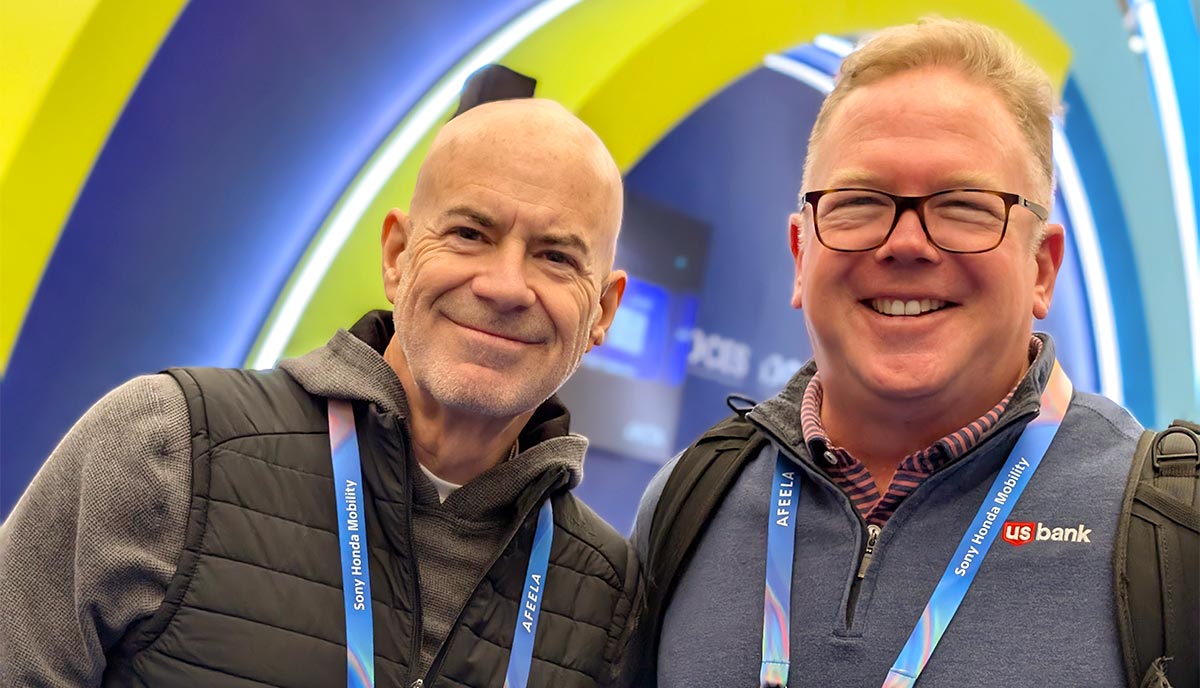
U.S. Bank innovation leaders Todder Moning, left, and Don Relyea brought a team to CES 2026 that included a risk management expert.
“It struck me that ‘healthcare is wealthcare’,” says Moning. “The outcomes you have relative to health are closely aligned with the outcomes you have relative to wealth. How much you spend on it, what you can do to improve it, that kind of thing.”
Banking opportunities in healthtech. Moning notes that many of the health-related devices have an upfront cost, which banks can finance. On top of that, they usually rely on associated subscription services, which suggest embedded payment channels.
Read more: What Banks Can Learn from BofA’s Multi-Billion Dollar AI Bet
2. Robo-bankers
CES featured robots of every shape, size and description, ranging from human-size androids that play chess, ping-pong and tic-tac-toe to parrot-size robots that could balance on a shoulder to plush robotic toys, advanced robotic arms and stair-climbing and flying robot vacuum cleaners. Both Relyea and Moning tried out robotic exoskeletons, strap-on devices that boost human strength. Moning can see these becoming a tool in everyone’s garage — currently at $4,000 a set, that means financing.
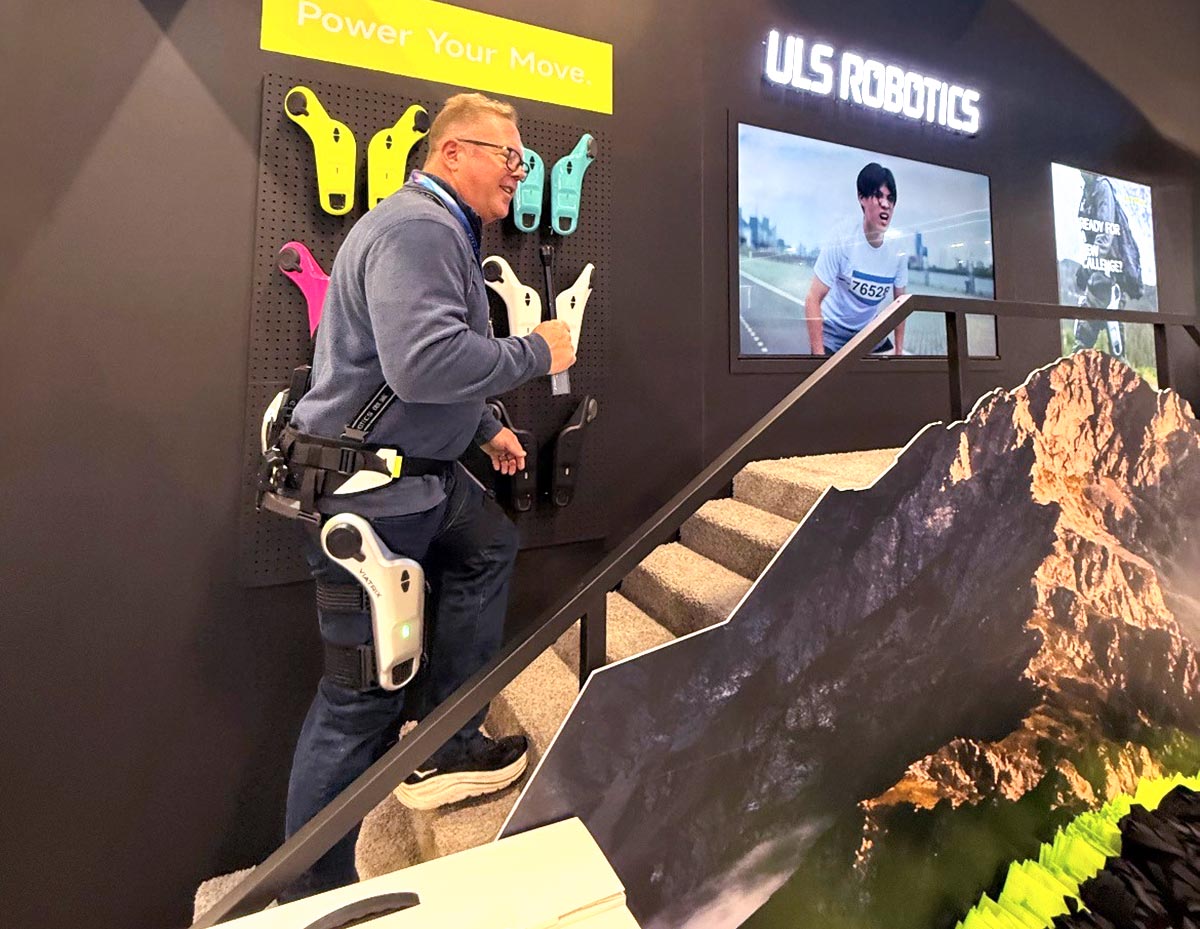
After a short stint to learn the wearer’s muscles, the powered exoskeleton Don Relyea is wearing makes walking and lifting nearly effortless.
Robotic reality check. Could robots become a low-cost branch greeter?
“The animatronics aren’t there yet,” says Relyea. “Even the most realistic stuff is super creepy. We saw some robots wearing rubber skin, and they were just weird.”
U.S. Bank branches currently have human greeters and Relyea says customers like the human touch. “And we want the human connection,” he adds, “especially at the front door of our branches.”
But Moning does see a future for androids in branches. “Today’s kids will have robots as toys and they’ll study robots in junior high and high school.” Just as today’s young people are digital-natives, that generation will be robotic natives, Moning predicts.
Closer to reality: Hologram bankers. Relyea says the team saw “human in a box” holograms designed to simulate your doctor, tapping into AI for medical expertise. He could see this coming into bank branches before robots.
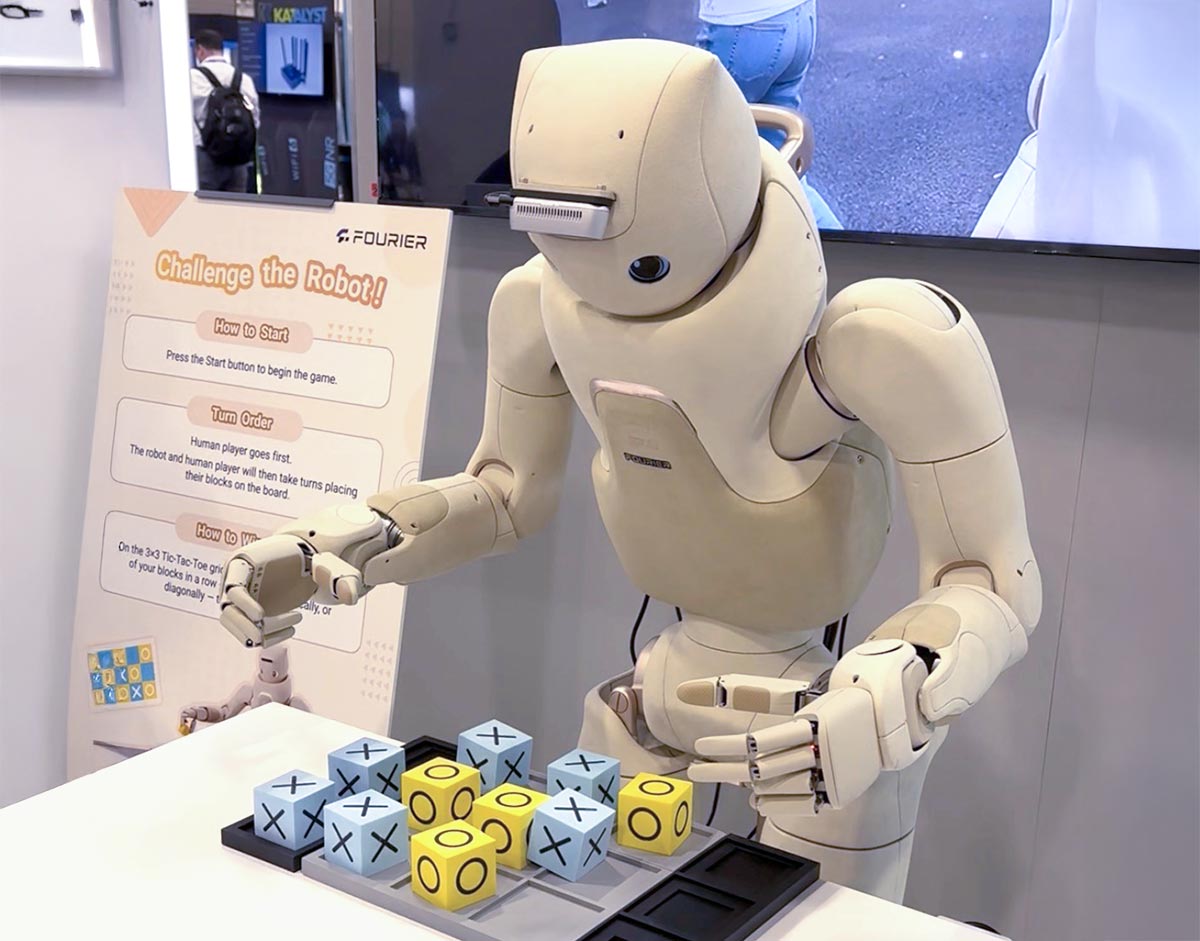
Robots can play games of all kinds, but are they ready to guide customers to the right people to help them in bank branches?
Read more: Brett King: Bankers Have Five Years to Rebuild for Agentic AI, Or Perish
3. The Return of the Metaverse?
Remember “phygital”? Back in the first years of this decade, the metaverse was big. Some institutions — including JPMorgan Chase — established branches on one metaverse or another.
It seems that the old metaverse is dead, but Moning thinks the concept isn’t. For now, the digital environment used to train self-driving vehicles and robots resembles the metaverse, he says.
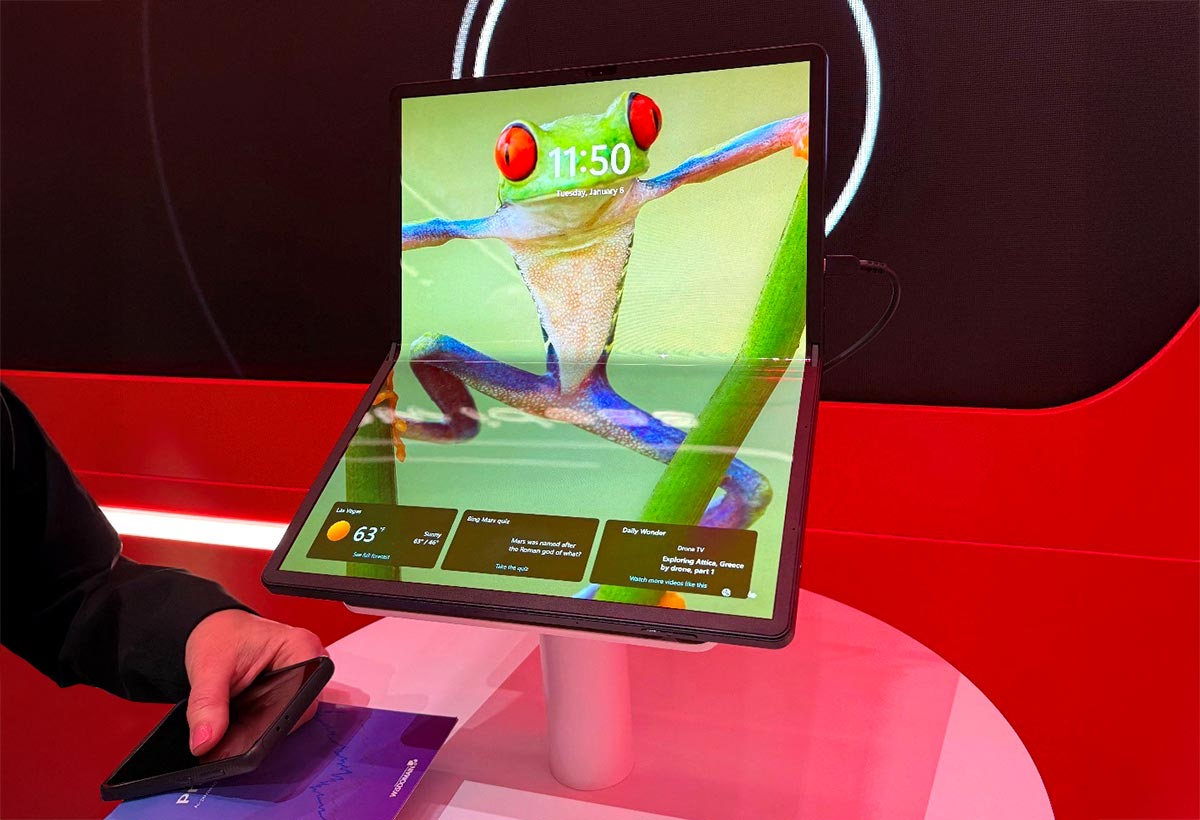
Unfolding at CES this year were foldable screens that, well, unfold, providing a much larger image area for applications.
“I think the metaverse might come boomeranging back,” says Moning. “We’re waiting for augmented reality glasses to advance the 20% in capability that they need before we all have them.”
What will be different this time. He’s convinced people won’t “live” in an alternative metaverse. Instead, “it will bring a digital overlay into the real world.” Think Pokémon Go.
Read more: U.S. Bank’s Dominic Venturo: Impactful Innovation Means Thinking Ahead of Today’s Emerging Tech
Key Takeaway: Engage Risk Experts Early and Often
U.S. Bank includes a risk management expert on the CES team as an extension of the bank’s practice back home, according to Relyea. Any new tech consideration and implementation generally includes someone from the bank’s risk staff.
“We’re tightly partnered with risk in the innovation function,” says Relyea. He says they generally take a “no … but” approach to the edgy. “They figure out how we can achieve the same business outcome but with the right level of risk controls around it.”
Relyea says risk staffers have been especially helpful with AI, helping to put protective layers in place to insulate the bank from leakage of customer and bank data.
Treat risk as an ally. “We joke that you could pull a string on the back of them and they’d say, ‘No! This needs more controls’,” but that’s not how they actually are. The risk folks we work with are really good problem solvers,” says Relyea.
“I can’t think of anything we saw at CES where they said, ‘No way in Hell,’ except for having those AI devices in secure areas.”
Read more about U.S. Bank’s past trips to CES:


