
Should Banks Bear the Burden When Customers Get Scammed?
By Steve Cocheo, Senior Executive Editor at The Financial Brand
Simple Subscribe
Subscribe Now!
The numbers are stark: According to recent research by Alloy, over half — 62% — of Americans report they have been targeted by a scam or know someone who has.
The problem is the sheer volume of targets, according to Sara Seguin, principal advisor, fraud and identity risk, at Alloy and a veteran bank fraud investigator. Today’s fraudsters, aided by the latest tools including artificial intelligence, can continuously pepper both banking and payments providers and huge numbers of consumers relentlessly.
“Once they find a vulnerability, they continue to attack,” says Seguin. “If a handful fall for a scam, that’s a win for them.”
Criminals may begin by targeting larger players and their customers, but once they find something that works they make their way down the banking food chain, according to Seguin.
Who’s to blame? Americans understand that they bear some responsibility to protect themselves. But as losses to financial fraud continue to rise, an increasing number believe their financial institutions should reimburse them for losses anyway.
67% of consumers think institutions should make them whole even if they personally okayed a fraudulent transaction. And among Gen Zers and Millennials, 73% feel this way.
Need to Know:
- Fraud prevention and security are the most important factors for choosing a bank, according to nearly all of the 2,000 U.S. adults surveyed by Ally for its 2025 State of Scams report.
- Yet 69% of consumers also expect new account enrollment to take less than ten minutes. Almost 60% find signup too slow and too demanding as it is.
- Most Americans believe that they can spot financial scams themselves. By generation: 84% of Gen Z, 85% of Millennials, 83% of Gen Xers and 77% of Boomers.
The burgeoning fraud landscape. According to Alloy, consumers reported they or an acquaintance had experienced the following types of scams:
- Phishing, via text, email or phone 58%
- Identity theft 46%
- Payments scam 43%
- Credit card scam 42%
- Account takeover 38%
- Romance or social media-based scam 36%
- Investment or crypto scam 31%
- Deepfake/AI-generated scam 27%
Of those respondents who actually experienced a scam and had a loss:
- 47% received full reimbursement from their provider.
- 21% received only partial reimbursement.
- 22% asked for reimbursement and received nothing.
- 9% did not report the loss to their institution.
Clearly, banking institutions are no longer reimbursing everyone. “They’re not bottomless wells,” says Alloy’s Seguin — they can’t sacrifice everything on an altar of customer goodwill. And some people fall for multiple scams, Seguin adds, forcing banks to point out that they have covered them more than once.
“At what point does the financial institution say, ‘Maybe we’re not a good fit for one another’?” Seguin asks.
Dig Deeper:
Split on Who Bears the Brunt
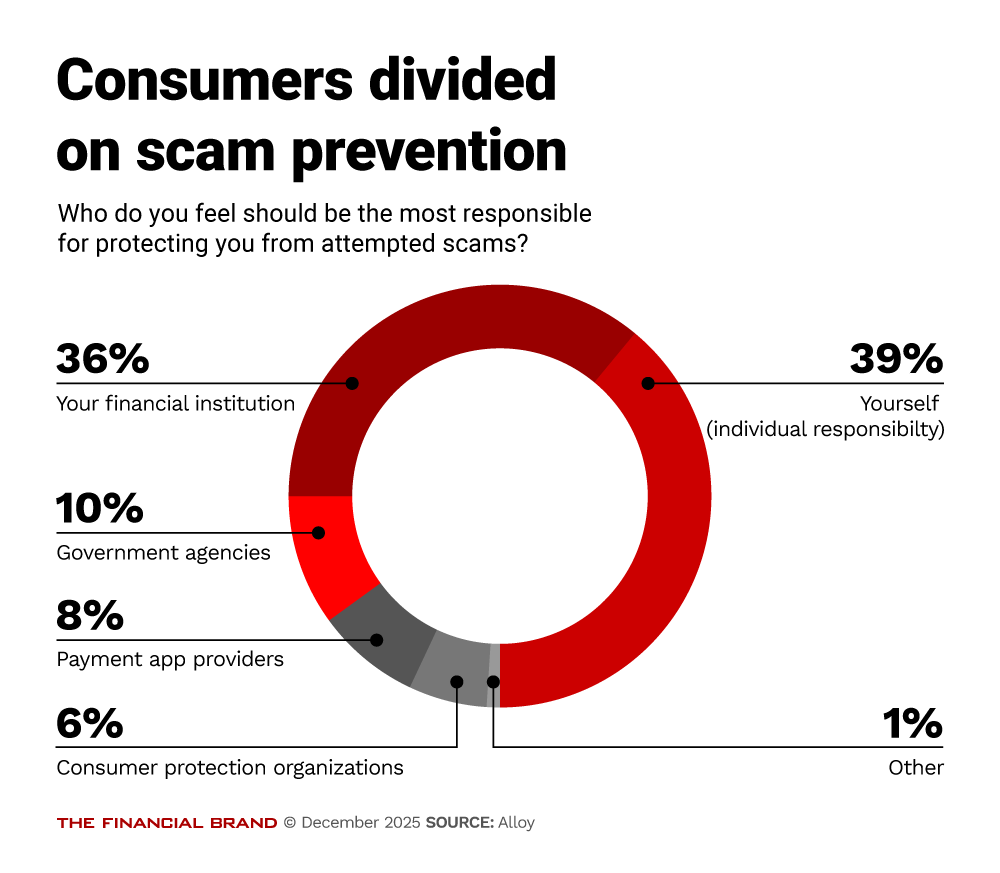
As shown in the chart below, the share of people who see themselves (39%) or their financial providers (36%) as the key party to protect them is nearly evenly split.
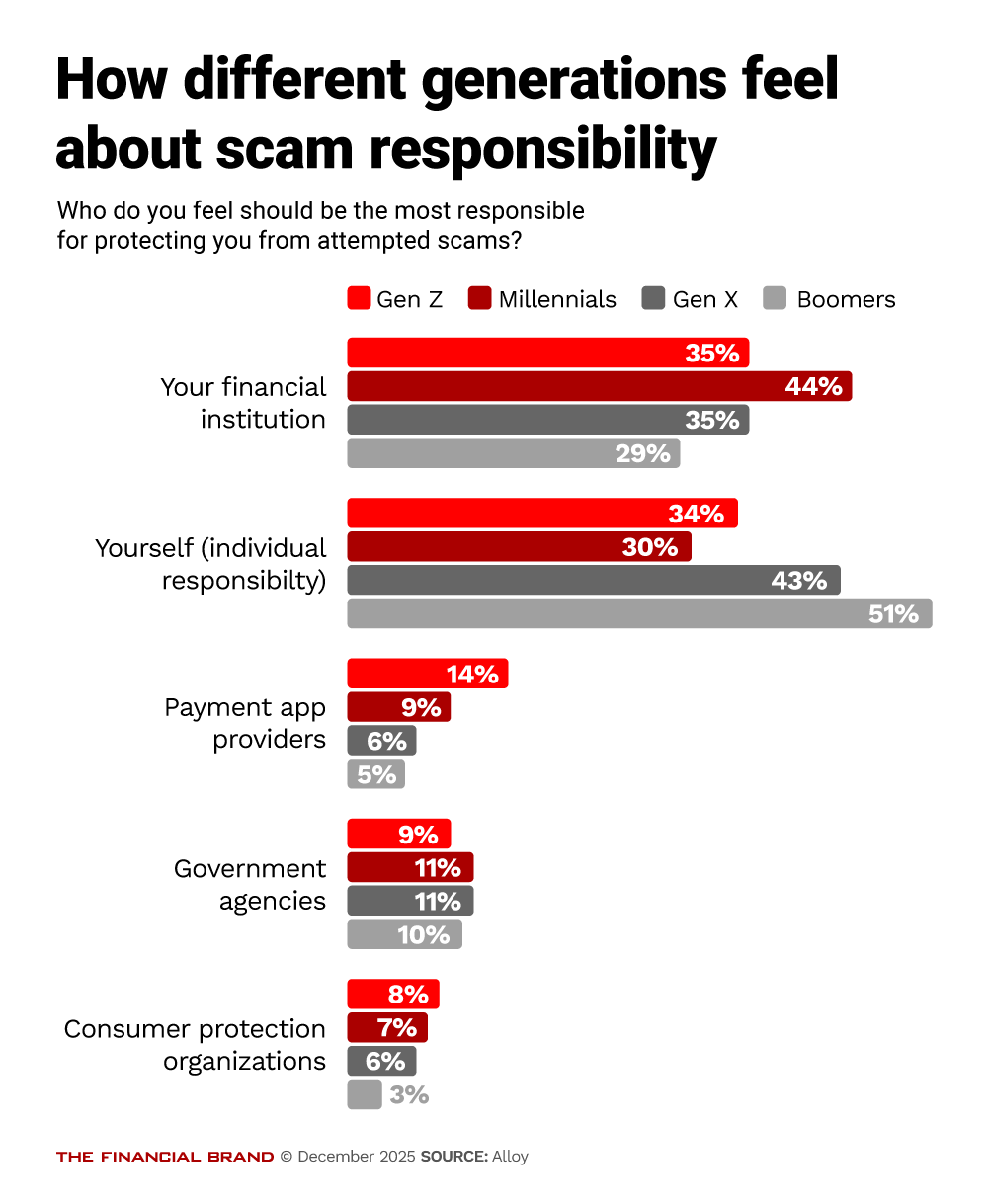
The second chart examines this trend by generation, with Boomers much more likely than other generations to see themselves as responsible for their own protection.
Read more: How to Stop Three AI Threats Changing the Face of Identity Fraud — Literally
What Can Banks Do About Fraud?
Seguin suggests key adjustments:
- Regard anti-fraud technology as something that needs constant updating. “The fraud world is moving incredibly fast and banks have to be able to do that too.”
- Monitor the availability of new or better tools. Document everything.
- Review anti-fraud policies regularly to adapt to new threats. There’s no set it and forget it.
78% of consumer surveyed say anti-fraud educational information from their bank or credit union helps them spot scams. Are your materials and online content up to date?
Read next: Fraud Is Your Loyalty Test: Win It or Lose Customers


