
L9 | Web Management for Credit Unions Weber Marketing Group - Brand Solutions Acton Marketing Blog | Financial Marketing Insights Momentum | Building. Branding. Breakthroughs. CU*SWAG | T-Shirts for Credit Unions

Don’t throw the TARP on credit unions

November 17, 2008

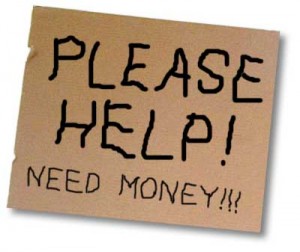
For many years, credit unions have lobbied hard to make sure they get fair and equal treatment from the U.S. Government. But begging the Treasury for TARP money is not a good idea.

CUNA, NAFCU and Fryzel at the NCUA have all joined together recently with their hands out as they ask for taxpayer relief. Each time they do, it undermines all the positive press credit unions have been getting (as reported by The Financial Brand here, here and here).

Key Question: Exactly how big is this problem? How many credit unions out there were engaged in risky lending practices that now leave them in such a vulnerable state that they need a bailout?

After weeks and weeks of mainstream media articles touting the safety, security and soundness of credit unions, why would credit union industry leaders want to come out with a “we-need-a-bailout-too” message? Are they willing to gamble the entire industry’s image just to make sure they get the same treatment as big banks?

Reality Check: If credit unions need a bailout, then they are contradicting claims that they are run differently than banks.

Big banks have made it tough for everyone in the financial services industry, for sure. And maybe the imposition on credit unions is so great that they actually need some relief. But if that’s the case, then this assistance should be directed at all credit unions, and not just used to create relief mechanisms for those who put themselves in jeopardy.

And if credit union associations feel that injecting capital into conventional banks is a misuse of TARP funds, then they should be lobbying Congress and the Treasury to have that money returned to the taxpayers — not begging for their “fair share.”

Bottom Line: If credit unions get TARP money, they are taking a powerful arrow out of their quiver and handing it to banks who will fire it right back at them.

If there are credit unions out there with “toxic assets” due to subprime mortgage practices, then they should take their lumps as quietly as possibly and not drag the entire industry down along with them.


Print This Article Share
Captive Indoor Media | Digital Signage for Financial Institutions


Previous related stories from The Financial Brand:

SPONSORED MESSAGE: Is your bank or credit union ready to go green with its branches? Watch this free webinar playback, “Green Is The New Black,” where the branch-building experts at Momentum outline the strategy, rationale, challenges, advantages and ROI of eco-friendly financial facilities. WATCH NOW

Filed Under: Branding

Tags: , , ,

26 Responses

  1. Credit Union Warrior:

    100% agreed. Well put.

  2. Charles Bruen:

    This is an excellent observation. I also agree 100%. We have constantly preached that we are different. And different means that we don’t stand in line with the banks with our hand out. Taxpayers and members deserve better from credit unions.

  3. Morriss Partee:

    Jeffry, you are spot-on with this one. In fact, I’d encourage EVERY staff person of a well-run CU to put their two cents RIGHT HERE as a comment to Jeffry’s well-stated post that the CU movement DOES NOT NEED A HAND OUT.

  4. Andy LaFlamme:

    Jeffry, you are totally right on this one. It doesn’t make sense at all for all of us who work at credit unions to put out and highlight articles, press releases, and marketing touting our security while the leaders of our industry hold the cup out to the government. We should be setting a different standard here. One that doesn’t include government money to keep us solvent…because we don’t need any!

    The majority of credit unions don’t need a bailout, and the ones that do, in my opinion, deserve to fail, just like any business that makes bad decisions and investments deserves to fail.

    So, to all those at the national credit union organizations I say, “CUT IT OUT! You’re ruining it for the rest of us!”

  5. Matt Vance:

    I agree with you all here but Andy I think you’re coming off a bit harsh on the CU’s that may have gotten into some trouble. How do we know the reason they’re failing is because of “toxic loans” as Jeff refers to? I’m sure there are a lot CU’s whose balance sheets don’t look that great and they probably didn’t make “toxic loans”.

    Instead of putting our hands out to the govt. and asking for assistance why don’t we CU’s rally around each other. Why can’t we create a pool of CU money to help bail each other out? I know it kind of sounds crazy but think about, banks would NEVER do this in a million years. This would prove our differences and help each other out. I get the whole, only the strong survive and you get what you pay for mantra, but is that who credit unions really are?

    We can pool all the money in CU land for a national advertising campaign to say how great, safe and different we are, but what if we just lived out our own operating philosophy of people helping people. This would be the strongest thing we could EVER do to show consumers who we really are. If SMCU can do over $1 million of in-kind ad dollars off a $10 pay it forward promo think about the press we would get off of something like this.

    I know it would probably be impossible to do and there are tons of legal and regulatory red flags surrounding something like this, but just think about the principle behind it and how cool it could be.

  6. Matt Dean:

    I personally would have a hard time continuing my passion for credit unions if they were to achieve participation in TARP. I’m already disappointed in the pursuit of participation, though I know there are many CU executives who aren’t looking for government help.

    As long as CU’s are “members helping members” I’m in. The day it becomes “taxpayers helping members” I’m going to have to search for another movement or rally behind those CU’s that are rejecting taxpayer money.

  7. Morriss Partee:

    @Matt Vance: Don’t the corporate credit unions already fulfill this exact purpose? Be a source of low cost funds to individual credit unions? And by extension, the U.S. Central Credit Union in Lenexa, Kansas, which is the corporate credit unions’ credit union?

  8. Andy LaFlamme:

    Oh, I know I’m being a bit harsh, but its because I have a very strong belief around this. It doesn’t matter why the institution’s balance sheet is sketchy, or even whether they are a credit union or bank, why should tax payer dollars ever be thrown into private business? Thats a whole other discussion though.

    I don’t think that credit unions bailing out each other would be a good idea either. How would your members react if they discovered that your credit union was dumping a bunch of THEIR money into another credit union that was failing. As credit unions we are there for our member’s best interests, how is bailing out a failing institution with members’ money a benefit to your members? How is using your members’ money to bail out another credit union any less dangerous than using tax payer money? Its still a bail out, and its still using other peoples to bail out a business that is failing for a reason.

  9. Jeffry Pilcher:

    @Matt Vance – CUNA and the NCUA have been very specific about using TARP money to provide a relief mechanism for credit unions with “toxic assets” (e.g., subprime mortgages). See these articles here and here. They both mention or allude to toxic mortgages. Had they not been so specific and just asked for general relief, maybe that would temper people’s feelings.

    Also, I like the suggestion whereby credit unions take care of their own (credit unions helping credit unions, as it were). But Morriss may be right. I don’t know the full scope of corporate credit unions. I do know that there are a few that are struggling severely right now, so maybe they aren’t in a position to help.

  10. Credit Union Warrior:

    Andy – that’s why credit unions are democratically owned and operated. If the members, through their elected Board, want to help another credit union, they can. If they don’t want to, they shouldn’t.

    Mergers are nothing more than credit unions helping credit unions. There isn’t anything inherently bad about that.

    Your point on taxpayer-funded bailouts, though, is right on target. Our Federal income tax exemption, our structure, and our founding philosophy mandate that we hold ourselves to a higher standard. If credit unions want to receive TARP money, I’m out. I’ll sooner sell encyclopedias door-to-door than work for a credit union that accepts bailout money from this program.

  11. Matt Vance:

    @morriss Like Jeff, I don’t know the full scope of Corp. CUs but now may be a better time than ever for me to learn! They may be the means to bailout struggling CUs.

    @Andy I agree with you completely about using taxpayer money to bailout private business. The new talk about bailing out the auto industry is so frustrating, where is it going to end? As for using members’ money to bail others out…I get that but the members don’t have a say in a lot of the ways we spend the CU’s money. I don’t see the money being used simply as charity, it would be an investment somehow (my idea is more theory/principle than practical).

  12. Andy LaFlamme:

    CuWarrior – I ask you this, how many credit union boards are as out of touch with their members as the national organizations seem to be with credit unions? As much as we love our democratic structure, how many credit unions have a board of directors that has remained the same for years or decades? Would the decision really be democratic or would the board make a decision behind closed doors without truely taking into account the membership’s feelings on the matter.

    With a merger, the members have the opportunity to vote for or against the merger. Would the same thing apply to sending money to another credit union, or would the board vote on and budget it with little to no member input?

    There is a time and a place for mergers. Like you said, a merger can be used to help out a struggling credit union. However, there is a process to a merger that requires a vote, but would those same requirements be used in a monetary bail out?

    I’m playing devils advocate here, but I think there are some legitimate concerns any time a purely monetary bail out is considered, regardless of whether its coming from taxpayers or members.

  13. Credit Union Warrior:

    Andy – you and I are in agreement about the bailout.

    Your cynicism (justified or not) about credit unions’ democratic process doesn’t change the fact that those mechanisms are in place. Members must stay involved, demand a say, and exercise their rights as member owners. Organizationally, you can encourage that…but there’s no way (at least that I’ve seen implemented) of mandating it. Democracies can’t fix apathy, but they can defend themselves against the apathetic.

  14. Doug Adams:

    No doubt TARP is the hot topic in the credit union industry today, and will possibly be the hot topic for weeks to come. I feel that it’s my duty as a credit union CEO to chime in and give my 2 cents worth.

    Each morning at the gym I’m approached by a local physician, attorney, real estate broker and a landscaper about what I think will happen in the great bail-out today. I’m also asked what I think the stock market will do and so on…… Of course, if I had the magical answer or could see clearly into the crystal ball I wouldn’t be sitting here blogging.

    The message that I give loud and clear to my captive audience (covered in nothing but a towel) is that credit unions are in a very unique position. Thankfully, the Oncologist in the group is a strong member of my credit union. I have repeatedly (while looking over my shoulder) let them know that the banks are the one’s waiting with their hands out for the government payday. I have indicated that credit unions, as a whole, will only be indirectly impacted as a result of the poor decisions of banks. Now, the new question is the auto industry and their plea for help. Again, I have held strong that credit unions are safe, sound and secure in their positions, and will have no need to take money from the American taxpayers.

    Personally, I would hate to see the powers-that-be take cover under TARP when I really can’t see the need to do so. I understand there are credit unions in distress and troubled but a quick relief is probably not their answer either. I feel that if we do ask for and accept TARP then we as the credit union industry had better run for cover someplace else.

    At a time when public awareness seems to be at it’s peak for credit unions, this is our time to shine like never before. The media has never been eager to embrace credit unions and have always pushed banks to the forefront. Well, banks are no doubt at the forefront today, but in a negative light. Credit Unions are glowing Stars today given our recent press. I have been saying it since I came into the credit union industry (from a bank), “credit unions should do what they do best and stop trying to become a bank.” I feel that my statement couldn’t be more profound given today’s situations. For my credit union, we’ve never wanted to become or be like a bank, and we sure dont’ wish to start with TARP as our conversion platform.

  15. Denise Wymore:

    Jeffry,

    Great post. I’m so glad this conversation is occurring in a public format. Now if we can just get CUNA and NAFCU to listen.

    Therein lies our problem, IMHO. Both have dues paying credit unions hiring them to lobby – and these two trade associations, as far as I can tell, are NOT on the same page about how to help their members. And by members, I mean DUES paying credit unions (read CEOs of large credit unions with jobs at stake).

    That’s what is so frustrating about this issue. The majority of credit unions are in great shape and stand to greatly benefit from this crisis by the press pointing out the REAL difference and shouting our praises, but the collective voices of these do not overpower the few voices that are screaming for help right now.

    Anyway – here’s how I see it. If the CEO of a big enough credit union, paying big enough dues to CUNA or NAFCU wants some bail-out money we’re all at risk. CUNA does seem to have a good solution (using our NCUSIF to help) but what I’ve been reading lately, NAFCU is still pursuing taxpayer money (I wrote about it here http://denisewymore.wordpress.com/2008/11/13/business-weak-by-businessweek-magazine/)

    I agree with y’all. If we take that dirty money, we deserve to be taxed, and I’m outta here.

    I still think the decent thing to do (for the credit unions with toxic assets on their books) would be to convert to a mutual savings bank and then get in the welfare line.

    But how do we get that message to the trade associations? If we don’t pay them, they won’t listen.

  16. The Financial Brand » Blog Archive » Credit unions glow in media spotlight (Part IV):

    [...] Reality Check: The biggest PR bonanza to hit credit unions — ever — will come to a screeching halt if they take TARP bailout money as part of a “rescue plan” to address “toxic assets.” Expect all the good news stories about how credit unions are “safe and sound” to evaporate. Poof! Gone. [...]

  17. shari storm:

    I know, I’m always late to the party and I’m sure the room is empty by now, but….

    While I agree that CUs should stay away from TARP on the matter of principle, I have to add that it’s not quite as simple as we’d like it to be. For example, what happens if all of the banks around us are infused with cash?

    Suddenly, they can offer better rates. They can advertise more. What if this happens at the same time we are experiencing our A member defaulting and our non-interest income plummeting?

    Or, what if the bailout comes in the package of a consumer incentive – something crazy like bank customers can get a mortgage push down but credit union members can’t?

    As for this harming our reputation, I tend to think that consumers are not quite as savvy on the bailout options as industry folks are.

    If this issue were really cut and dried, our smartest minds would not be agonizing over it. I think our CEO’s have the members’ best interest in mind. I really do.

    That is what I think.

  18. Jeffry Pilcher:

    There are a lot of “what ifs,” but the one that bothers me the most is “What if we give out (more) money that doesn’t really need to be given out to those who don’t really need it?” How about we only give money to those who need it once a real need has been demonstrated? If our country gets into handing out money based on “what ifs,” we’re headed for bankruptcy.

    As a taxpayer, the idea that we would give any organizations money that don’t truly need it is one I find very unsavory. Never mind the fact that, as a capitalist, I object to the whole concept of government giving businesses money in the first place.

    Theoretically, the money given to banks that are struggling should not give them a competitive advantage; it should (again, theoretically) save them from the brink of ruin. At least that’s how the argument goes. Apparently, their balance sheets are so screwed up that they need cash to get their cap ratios back up to where they can legally lend again.

    The idea that healthy credit unions deserve money because struggling banks are getting money sounds a lot like an average income earner saying they need a handout because some people get welfare: “It isn’t fair!”

    Even if — and that’s a big “if” — the credit union industry needs a bailout, the manner in which the relief has been sought has been mishandled. For starters, is it a bailout, or is it about equitable treatment and fair play?

    Instead of begging for a bailout, why didn’t the CU industry try this approach: “All those banks you’ve given billions to aren’t doing what they’re supposed to with the money. They are doing two things. (1) They are sitting on it, and aren’t lending it out. (2) They are using it to buy-up other banks. If you give money to us, the credit unions of America, we guarantee that we’ll lend it out — directly to American consumers on Main Street. That’s what we do. That’s all we do!”

    Re: the tarnished reputation… It doesn’t matter how savvy Joe Public is. If the media doesn’t descend on a CU TARP bailout immediately, they will after the ABA gets a hold of them.

    And, as history has proven many times, the good intentions of our leaders do not always equate to positive outcomes.

  19. shari storm:

    Excellent points. Thanks!

  20. Morriss Partee:

    I give you props, Jeff, you called this one. It took less than 24 hours from acceptance of TARP (or HARP or whatever) to the media asking if credit unions are in trouble, as you pointed out this morning by tweeting the link to the Times magazine article. I look forward to your blog post about this development.

    http://www.time.com/time/business/article/0,8599,1865649,00.html?iid=sphere-inline-sidebar

    Way to go, Michael Fryzel and the NCUA. You just communipunched all credit unions in the face. Nice job with that.

  21. Jeffry Pilcher:

    I’ve already got an article started. I’m planning to publish headlines and quotes from mainstream media stories as they come in. I’ve only got three so far. The Time Magazine one may be enough, and if that’s all I’ve got, that’s what I’ll work with.

  22. The Financial Brand » Blog Archive » Credit unions, welcome to the TARP bailout…:

    [...] articles with a much more somber, sober tone have taken their place, something The Financial Brand predicted would happen in an article last [...]

  23. The Financial Brand » Blog Archive » 2008: The Year in Review:

    [...] Don’t throw the TARP on credit unions [...]

  24. The NCUA Corporate Stabilization Plan « EverythingCU.com World 2.0 Adventure:

    [...] Pilcher’s Financial Brand (Don’t Tarp CUs, Tarp on CUs, CU [...]

  25. The Financial Brand » Blog Archive » Credit unions to pay for their day in the sun:

    [...] Financial Brand has previously written about the perils of participating in TARP, as well as the specific risks credit unions face should their requests for bailout money be granted. But this type of investigative report takes the [...]

  26. The Financial Brand » Blog Archive » Credit unions, welcome to the financial crisis:

    [...] If credit unions go out of their way to reassure an anxious public now then find themselves taking TARP money sometime down the road, the industry will lose all credibility, all the good-will and all the [...]

Leave a Reply