
Acronym
 Brand names formed from the initial letters (or parts) of a series of words — e.g., NATO (North Atlantic Treaty Organization), laser (Light Amplification by Stimulated Emission of Radiation). In the financial industry, WaMu is a good example. Acronyms are commonly confused with “Initialisms.”
Brand
The collective perceptions and impressions people have formed about an organization, its products and/or its services, whether through direct (ads/purchase) or indirect (word-of-mouth) interactions. Any noun can have a brand, including people, places and things — e.g., Donald Trump, Las Vegas and American Express.
Brand Architecture
Brand architecture is the relative structure of an organization’s brands. The way in which the brands within a company’s portfolio are related to, and differentiated from, one another — i.e, a brand “family tree.” Example: Proctor & Gamble’s brand architecture includes Tide, a Household Care brand, and Crest, a Beauty & Grooming brand.

Brand Asset
Any aspect of a brand that has strategic value — e.g., visual symbols, slogans, sounds, photos, mascots, etc.
Brand Attributes
A specific set of characteristics that identify the visual, verbal and behavioral traits of the brand, much in the same manner that personality attributes define the people we know.
Brand Equity
The accumulated financial and strategic value of all associations and expectations (positive and negative) that people have of brand. Brand equity can be quantified four ways: 1) economic value of the brand and its assets, 2) the price premium that the brand commands, 3) the long term consumer loyalty the brand enjoys, or 4) the market share the brand gains through its reputation alone. Note: brand equity can be negative.
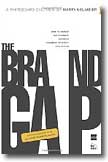 Brand Gap
The difference between the brand’s strategy and the actual experience.
Brand Identity
The outward expression of a brand — i.e., look-and-feel — as created by a system of standards including colors, fonts, images, photos, graphics and design. (Compare to “Corporate Identity.”)
Brand Image
The mental associations, ideas, feelings and beliefs people think of when they see or hear a brand.
Brand Positioning Statement
A clear, concise, focused statement capturing the essence of a brand’s differentiation. (Compare with “Unique Selling Proposition.”)
Brand Promise
Consumer expectations about what the brand will deliver. The experience — good or bad — one can expect from a brand. When an organization defines its brand promise, it should be differentiated, relevant, credible and irreproducible. (Compare with “Brand Image.”)
Branding
An organization’s deliberate and intentional attempt to shape and influence people’s perceptions of their brand(s) in specific directions.
Challenger Brand
A new or rising brand that is viable in spite of other existing brands dominating the category.
Coined Name
A brand name that’s been invented or made up — e.g., Kodak, Experian. The advantage of such names is that they are easier to trademark, and they can be given their own meaning.
Core Values
The principles, ethos and philosophical ideology that all employees of an organization are expected to use, live by and demonstrate on a daily basis.
Corporate Identity
A narrower subset of the overall brand identity including the brand’s core component — primarily its name and logo. A corporate identity system typically includes formal business papers (not marketing) — e.g., business cards, letterhead, envelopes, mailing labels, invoices, etc. (Compare to “Brand Identity.”)
Design Grid
The hidden, underlying system of spatial units defining the organization’s use of imagery and how content is structured in two-dimensional layouts (e.g., printed pieces).
Eponym
Names created around fictional (or real) characters, such as Victoria’s Secret and Betty Crocker. Starbucks was derived from the name of a character in Herman Melville’s Moby Dick (the logo is a Melusine). In the financial industry, John Hancock is a good example.

Initialism
A group of initial letters used as an abbreviation for a name or expression, each letter being pronounced separately — e.g., ING. (Compare to “Acronym.”)
Logotype
The stylized lettering often employed in a logo — i.e., font. The part of the logo with the brand’s name — separate from the symbol or icon. (See also, “Wordmark.”)
Mission Statement
A mission statement is a short, formal written statement of an organization’s purpose, defining its scope and focus in plain, simple, descriptive terms. A mission statement is a practical outline of business objectives that avoids corporate clichés and boardroom buzzwords. Mission statements define what the organization does today, while vision statements describe what the organization wants to become or accomplish tomorrow.
 Monogram
A type of logo using the letter(s) from a name to create a sort of visual shorthand or abbreviation. Examples: VW and McDonald’s Golden Arches.
SWOT
Short for “Strengths, Weaknesses, Opportunities, Threats,” a common analysis performed in brand assessments and at strategic retreats.
Tagline (or Slogan)
A frequently repeated word, phrase or statement that captures the essence of a brand’s promise. An expression that conveys the most important attribute or benefit that the advertiser wishes to convey.
Unique Selling Proposition (USP)
The driving competitive advantage. (Compare to “Value Proposition” and “Brand Promise.”)
Value Proposition
An analysis and quantified statement of the benefits that consumers can expect. Note: You can have a value proposition that isn’t unique (i.e., a “Unique Selling Proposition.”)
Vision Statement
The goals, dreams and future aspirations of an organization. Vision statements describe what the organization wants to become or accomplish tomorrow, while mission statements define what the organization is getting done today.
Wordmark
A style of logo that uses type only. These logos are involve just color and font, and have no attached symbol or icon. Examples: Coca-Cola, Old Navy.